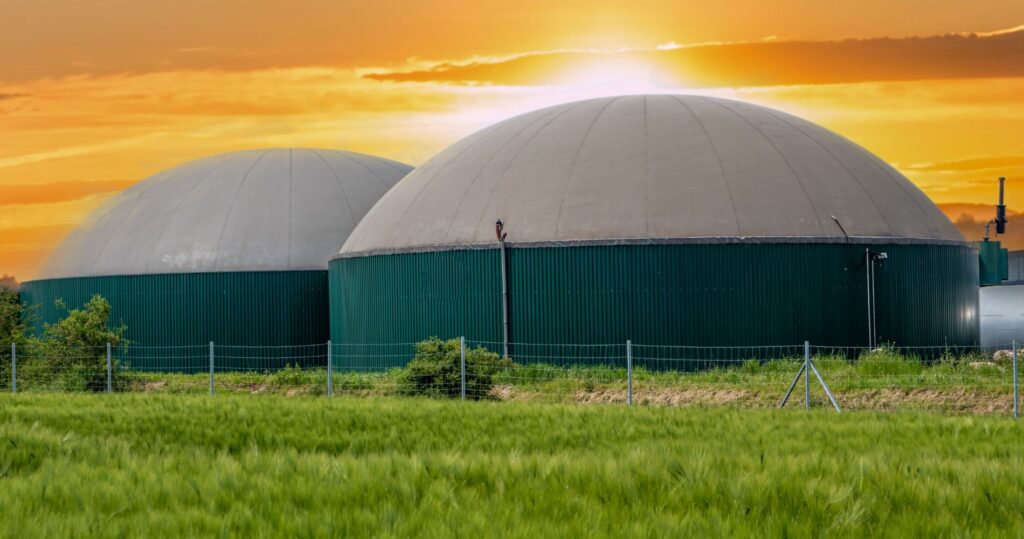
The IEA report highlights that global biogas and biomethane production volumes could rise by 22 percent by 2030 compared to 2025, reflecting a review of expectations and a more favorable scenario for investments in renewable energy. The analysis includes data that reveals variations in the speed of growth between regions, with emphasis on Europe, North America and developing markets in Asia and Latin America.
In December 2025, the Paris Agreement marked a decade as the cornerstone of global climate governance. Signed by 195 countries at COP21, the agreement established the commitment to limit the increase in average global temperature to well below 2 °C above pre-industrial levels, while pursuing efforts to cap warming at 1.5 °C. Ten years on, the question that arises is both direct and strategic: in practical terms, what are the impacts of these targets on the energy sector and on investment decisions?
Across the vast plains of agribusiness, in the landfills surrounding our major cities, and within sewage treatment plants, a silent energy revolution is underway. Brazil — a natural giant — is finally awakening to the immense potential of biogas and its noble derivative, biomethane.
Brazil finds itself in a unique—and frankly enviable—position in the global energy landscape. While the world’s largest economies struggle to decarbonize their energy mix, the country already boasts a consolidated leadership, with an electricity system powered by more than 80% renewable sources.
The year 2025 emerges as a critical milestone in the fight against climate change. Recent reports from organizations such as the International Renewable Energy Agency (IRENA), the United Nations (UN), and the Intergovernmental Panel on Climate Change (IPCC) converge on a clear message: the window of opportunity to avoid the most catastrophic impacts of global warming is rapidly closing.
Urban solid waste management (USW) is an increasing challenge in Brazil, especially with population growth and accelerated urbanization. An effective solution to mitigate environmental impacts while simultaneously generating energy is waste-to-energy (WTE) recovery. However, Brazil is significantly behind in adopting this technology, particularly when compared to developed countries.
Decarbonizing the energy matrix has become a global priority in the fight against climate change. But how can we decarbonize efficiently and sustainably?
Climate change is evidently impacting the frequency and intensity of extreme events, such as heatwaves, severe storms, and floods. These phenomena result from global warming, driven by the increase in greenhouse gas (GHG) emissions.
In the next ten years, Brazil is expected to experience significant growth in biofuel supply, according to studies recently released by the Ministry of Mines and Energy (MME) and the Energy Research Company (EPE).