The April 2026 edition of the Outlook for the Brazilian Fuel Market in the Short Term, published by EPE, projects more than 3 billion additional liters of demand for liquid fuels and LPG in 2026 and again in 2027. This movement confirms the vitality of the Brazilian economy, but also highlights the complexity of the energy transition in a country where security of supply, social inclusion, competitiveness, and decarbonization need to advance in a coordinated manner.
In 2023, Brazil reached important milestones in energy generation from biomass, with an average of 3,218 MW generated, equivalent to 4.6% of national energy consumption. This record, reported by CCEE, surpassed the previous one from 2020 (3,140 MWm), reflecting the continued growth and importance of biomass in the Brazilian energy mix.
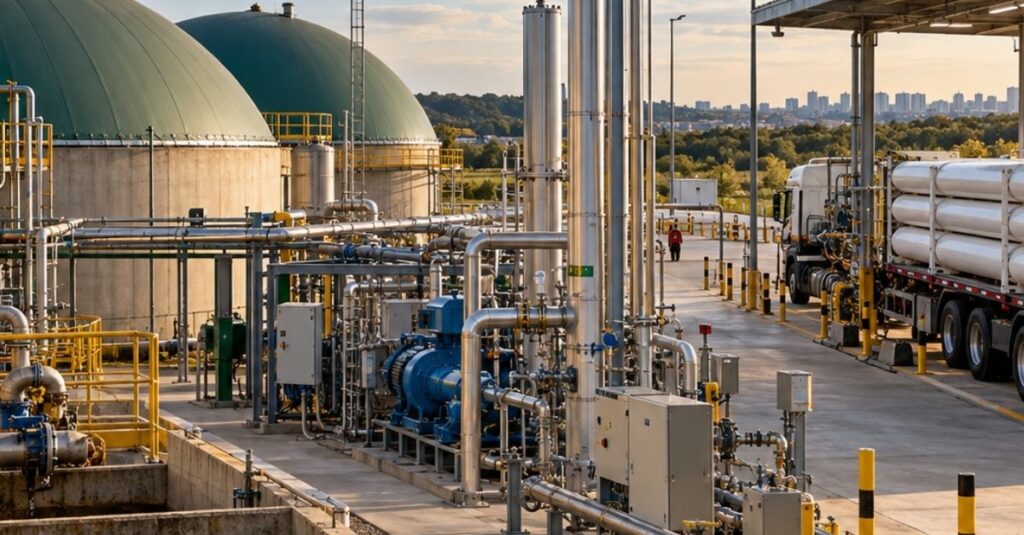
Brazil, a country recognized for its wealth of natural resources and renewable energy potential, is positioning itself as a leader in the transition to a low-carbon economy. In this context, biomethane and green hydrogen emerge as protagonists, promising to revolutionize the national energy panorama.
In 2023, biomass consolidated its position as one of the main sources of renewable energy in Brazil, contributing significantly to the diversification of the national energy matrix. Its integration into the National Interconnected System (SIN) was driven by the record generation of 3,200 average MW, a milestone that highlights not only the energy potential of this source, but also its relevance for the country's energy security and environmental sustainability.