What is energy security?
Energy is present in virtually every activity of a modern economy. It keeps factories running, powers transportation systems, supports digital networks, enables hospitals to operate, supplies water and sanitation systems, preserves food, and ensures basic services for households. When energy becomes unavailable, insufficient, or excessively expensive, the effects quickly extend far beyond the energy sector itself.
This is why energy security is an economic, strategic, and social concept. The International Energy Agency, IEA, uses the uninterrupted availability of energy sources at affordable prices as a reference. The definition therefore involves two dimensions that need to advance together: physical availability and economically accessible supply.
An economy may have abundant energy resources and still face security problems if it lacks sufficient infrastructure to produce, transport, and deliver them to consumers. It may also have adequate physical supply while remaining excessively exposed to international price fluctuations, supply chain disruptions, or excessive concentration in specific sources and suppliers.
In the power sector, the issue has its own characteristics. Electricity must be produced and consumed almost simultaneously, except when some form of storage is available. System operation must continuously balance generation and demand while maintaining technical parameters such as frequency, voltage, and equipment loading.
For this reason, energy security in Brazil does not simply mean having a large number of power plants. The system needs sufficient generation, transmission and distribution capacity, resources capable of responding to load variations, reserve infrastructure, monitoring systems, and forward-looking expansion planning.
The transformation of the electricity mix broadens this discussion. The growth of solar and wind generation increases source diversity and reduces the need for certain fuels, but it also changes the hourly profile of supply. At the same time, climate change, new loads, distributed generation, electrification of the economy, and digitalization are making the system more dynamic.
Energy security is therefore built through the interaction of different resources and institutions, rather than through the predominance of a single technology.
Energy security, security of supply, and reliability are not exactly the same thing
The three concepts are often treated as equivalent, but there are important differences.
Energy security is the broadest concept. It includes electricity, fuels, natural gas, oil, biofuels, and other forms of energy. It considers availability, infrastructure, exposure to risks, prices, the ability to respond to crises, and long-term conditions for meeting the needs of the economy.
Security of electricity supply focuses on whether sufficient energy and power capacity are available to meet system demand. It is associated with resource adequacy, the balance between supply and consumption, and the existence of infrastructure capable of delivering the required energy at different times.
Power system reliability is more directly related to the technical ability to keep the system operating within appropriate standards and to respond to failures and contingencies.
This distinction helps explain why energy security does not mean the complete absence of interruptions.
The National Electric System Operator, ONS, explains that all power systems are subject to interruptions. Building a grid completely immune to failures would require redundancy and investment on such a scale that the resulting cost would be economically incompatible with electricity rates that society could reasonably bear.
Planning therefore uses reliability criteria. In Brazil’s National Interconnected System, ONS states that the so-called N-1 criterion is generally applied. This means that the system should be able to withstand the loss of one element, such as a transmission line or piece of equipment, without causing a supply interruption, loss of stability, or violation of technical operating limits.
At the distribution level, reliability is assessed through other indicators. ANEEL monitors supply quality through continuity indicators, which measure, among other factors, the duration and frequency of interruptions experienced by consumers.
The objective of a secure system is therefore not to eliminate every possibility of failure. It is to reduce the probability of failures, limit their effects, and maintain the resources needed to restore service appropriately when incidents occur.
Why energy security is fundamental to the economy and industry
Reliable energy functions as basic infrastructure for productivity. An industrial facility does not evaluate only the price of the electricity or fuel it uses. It also needs to know whether supply will be compatible with its production requirements, whether quality will be adequate, and whether sufficient infrastructure will be available for future expansion.
Interruptions can halt production lines, damage materials, compromise continuous processes, and affect equipment. In sectors such as steel, chemicals, pulp and paper, food processing, mining, and data centers, supply stability can be particularly important.
The same relationship applies to the service sector. Hospitals, financial systems, telecommunications, data processing centers, transportation, water supply, and security infrastructure depend on continuous electricity.
Its importance is likely to grow as the economy becomes increasingly electrified. Electric vehicles, new industrial processes, air-conditioning equipment, and digital infrastructure are shifting a growing share of energy demand to the power system.
Security of supply therefore increasingly influences investment decisions. Regions with available energy, robust grids, and sufficient capacity to connect new consumers offer different conditions from areas where infrastructure is already operating close to its limits.
Energy planning and industrial policy are consequently becoming increasingly interconnected.
The energy mix is not the same as the electricity mix
A fundamental distinction for understanding energy security is the difference between the energy mix and the electricity mix.
The energy mix includes all sources used by society to meet its energy needs. This includes fuels used in transportation, energy consumed by industry, natural gas, petroleum products, biomass, electricity, and other sources.
The electricity mix specifically considers the sources used to generate electricity.
This distinction explains why Brazil’s renewable shares differ so significantly between the two indicators.
According to the 2026 Brazilian Energy Balance, published by the Energy Research Office, with 2025 as the reference year, renewable sources accounted for approximately 49.5% of Brazil’s energy mix. In the electricity mix, the renewable share reached 86.8%.
The same report shows the rapid transformation taking place in electricity generation. In 2025, solar photovoltaic and wind power together accounted for 26.4% of the country’s total electricity generation. Solar generation reached 88.1 TWh, an increase of 24.7% compared with the previous year, while wind generation reached 116.5 TWh, up 8.2%.
The Brazilian Electric Energy Trading Chamber uses a different methodology and accounting universe. In its assessment of the 2025 market, CCEE reported that 90% of the electricity accounted for during the year came from renewable sources. The difference from the BEN percentage reflects differences in scope and methodology, which is why the two indicators should not be compared as if they were identical.
For energy security, this diversity matters because different sources have different operating characteristics. Some are variable, while others can be controlled. Some rely on storable fuels. Others depend directly on hydrological or weather conditions.
Hydropower continues to play a structural role in Brazil’s power system
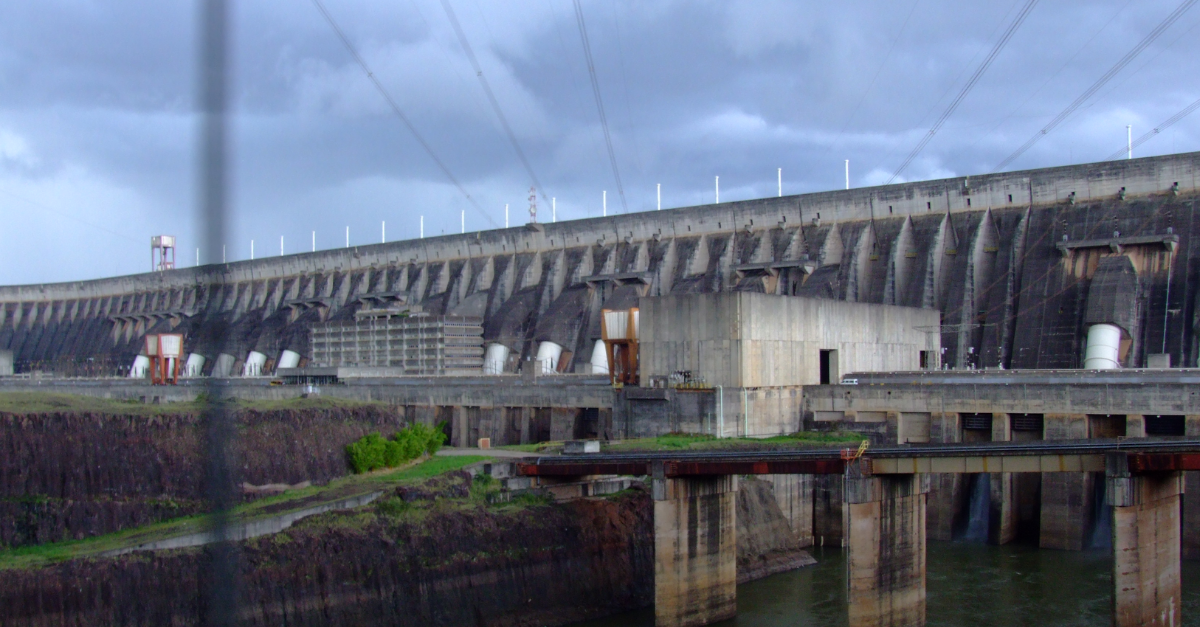
Hydropower formed an important part of the foundation of Brazil’s electricity system. The availability of major rivers and differences in elevation allowed the country to develop a hydropower fleet that accounted for the majority of electricity generation for decades.
Even with the rapid expansion of other sources, hydropower remains important to both the electricity mix and the operation of the SIN.
Hydropower plants have different characteristics. Some have large reservoirs capable of storing water and shifting generation over time. Others operate with smaller reservoirs or essentially as run-of-river plants, with more limited regulation capacity.
Reservoirs represent a form of energy storage. Instead of storing electricity directly, they store water that can later be used to generate electricity. This gives the system operator an important tool for adjusting generation to load conditions and the availability of other sources.
Hydrological dependence also creates risks.
Extended periods of inflows below expected levels can reduce stored volumes and limit future generating capability. Planning must continuously assess rainfall conditions, river flows, storage levels, and weather forecasts to determine how much water should be used and how much should be preserved.
This helps explain why water security and electricity security have historically been closely connected in Brazil.
Diversification of the generation mix reduces part of this exposure but does not eliminate the importance of reservoir management. The growth of solar and wind also changes the way hydropower plants can be operated. At certain times, hydro generation can be conserved while other sources are producing, preserving flexibility for periods when the system requires greater controllable power capacity.
Diversification expands the options available for security of supply
A diversified electricity mix reduces dependence on a single operating condition. The value of this diversity, however, lies not only in the number of technologies installed, but also in the way their characteristics complement one another.
Wind power has a strong presence in Brazil’s Northeast and experiences periods of high production associated with regional wind patterns. Solar generation is growing rapidly both in large-scale plants and in distributed micro and mini generation systems, with output concentrated during periods of higher solar irradiation.
Biomass and certain forms of bioenergy have different characteristics. When fuel is available and can be stored, generation can be scheduled with greater control. This creates an operating profile that differs from sources directly dependent on wind or solar radiation.
Thermal power plants also remain part of the electricity mix and can provide controllable generation when needed, although costs, emissions, fuel availability, and technical characteristics vary significantly among projects.
The most important principle is complementarity. One source does not need to reproduce the exact characteristics of another. The system needs to combine sufficient resources to meet demand under different conditions.
Solar and wind can reduce water use from reservoirs during certain periods. Hydropower can provide flexibility when variable generation declines. Storage can shift energy between different hours. Networks make it possible to take advantage of regional differences in generation. Thermal or bioenergy resources can provide controllable power when required.
Energy security emerges from this combination.
Transmission turns regional diversity into system-wide security
Brazil has continental dimensions and energy resources that are unevenly distributed across its territory. A significant share of the country’s wind potential is located in the Northeast. Large hydropower plants are located in different river basins. Major consumption centers are concentrated primarily in urban and industrial regions.
Without transmission infrastructure, electricity generated where resources are available cannot reach the locations where demand exists.
This characteristic makes the National Interconnected System one of the main assets supporting Brazil’s energy security. Interconnections allow different regions to exchange electricity according to their generation and consumption conditions.
During favorable periods for a particular source or region, part of its generation can be transferred to other submarkets. When one area faces constraints, it can receive electricity generated elsewhere in the country, provided sufficient interconnection capacity is available.
The expansion of solar and wind generation has made this role even more important.
The PDE 2035 Transmission Report, published by EPE and MME in December 2025, estimates approximately BRL 120 billion in transmission system investment through 2035 under the reference scenario.
This requirement is associated with renewable energy expansion, new loads, and changes in electricity flows across the system.
The challenge is not simply to build additional kilometers of transmission lines. The grid needs to be planned before bottlenecks emerge. Large transmission projects can require longer planning, licensing, and construction periods than solar or wind generation projects.
When generation grows faster than grid capacity, congestion and operating restrictions can emerge. Part of the available electricity may be unable to reach consumers.
Security of electricity supply therefore depends both on the existence of sufficient generation and on the physical ability to move that electricity through the system.
Distribution is the final stage between the system and the consumer
An adequate generation mix and robust transmission infrastructure do not, by themselves, guarantee high-quality supply to the end consumer.
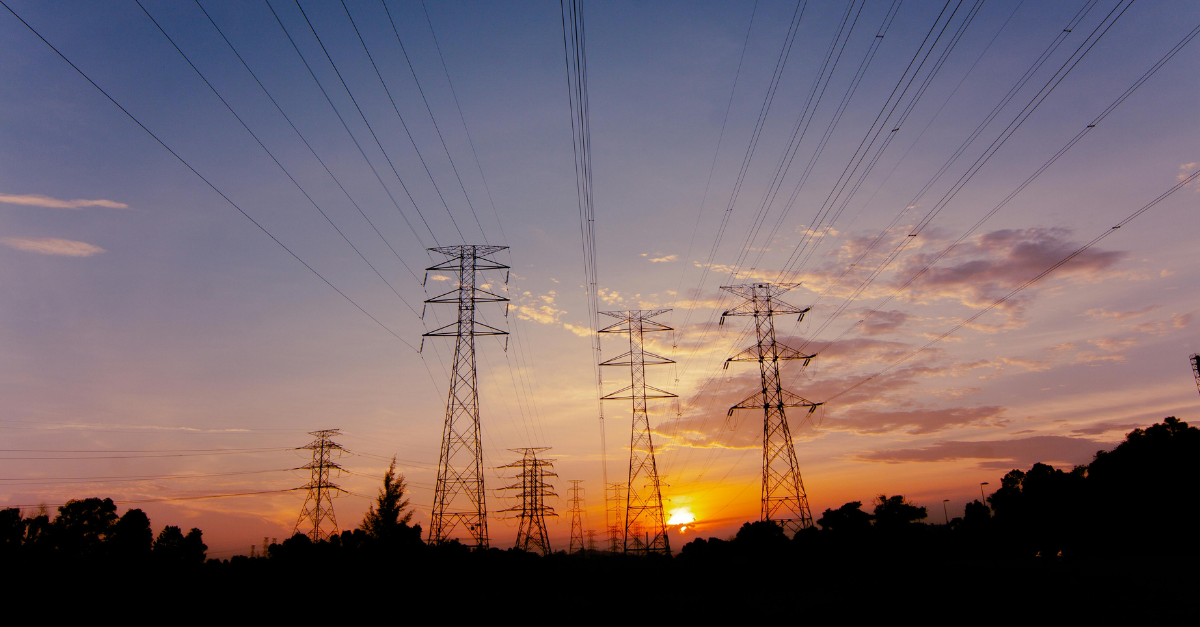
After traveling through the Basic Grid and other transmission facilities, electricity must reach distribution networks, which are physically closer to cities, businesses, and households.
This proximity creates its own set of challenges. Distribution networks are exposed to trees, storms, flooding, traffic accidents, lightning, and other local events. They must also accommodate a growing volume of distributed resources such as solar panels, batteries, electric vehicles, and new loads.
Digitalization, automation, and monitoring are becoming increasingly important for detecting failures, isolating affected sections, and restoring supply more quickly.
Modernization of distribution networks also affects the ability to use new flexibility resources. In a more digitalized grid, consumers, distributed generators, and storage systems can play a more active role in balancing supply and demand.
Storage expands the ability to shift energy over time
One of the most important changes in the power sector is the advancement of energy storage technologies.
The principle is simple: store energy when it is available and return it to the system when it is needed more. In practice, different technologies have their own characteristics in terms of power, duration, efficiency, response speed, and cost.
Hydropower plants with reservoirs already provide a form of storage. Pumped storage hydropower plants can pump water to an upper reservoir and generate electricity later. Batteries store electricity through electrochemical processes. Other alternatives include thermal storage, compressed air, and different long-duration storage technologies.
Batteries have attracted particular attention because they can respond quickly to operating commands and perform different functions, including shifting electricity between time periods, frequency control, power support, and congestion management.
In July 2026, ANEEL opened a public consultation on Brazil’s first auctions designed to procure large-scale battery energy storage systems. The draft rules provide for standalone systems with at least 30 MW of capacity, four hours of duration, and availability for centralized dispatch by ONS.
The initiative shows that storage is beginning to move beyond its role as an experimental resource and into a more structured position within power system planning.
This does not mean that batteries can replace every other source of flexibility. Storage duration, cycle requirements, costs, and project location strongly influence the services these systems can provide.
IRENA, in a report published in January 2026 on power system flexibility, emphasizes that storage, interconnections, demand management, and other resources need to expand together as the share of variable renewable generation increases.
Operational flexibility is as important as installed capacity
Two power systems may have exactly the same installed capacity and still present different levels of operational security. The reason is flexibility.
A flexible system can adjust generation, consumption, or electricity flows when conditions change. This capability can come from hydropower plants, dispatchable thermal generation, batteries, regional interconnections, controllable distributed generation, and consumers capable of temporarily modifying their demand.
This issue has become increasingly important with the growth of solar generation.
During periods of strong solar irradiation, solar output can rise quickly. In the late afternoon, this generation declines while a significant portion of demand remains. The system must then replace that output with other resources within a relatively short period.
The same logic applies to wind generation, although its patterns are different. Weather variations alter supply and require resources capable of compensating for those changes.
Flexibility also helps the system respond to unexpected situations, such as power plant outages, transmission line failures, sudden increases in consumption, or changes in hydrological conditions.
Installed capacity therefore cannot be assessed in isolation. The value of a resource to system security also depends on when it can deliver energy, how quickly it can respond, how long it can sustain delivery, and where it is located.
Demand response turns consumers into system resources
For many years, electricity planning focused most responses to system variations on the generation side. When demand increased, additional generation had to be dispatched.
Demand response creates another possibility: certain consumers can temporarily reduce or shift their consumption when the system faces greater need.
The structural Demand Response program operated by ONS allows eligible consumers to submit load reduction offers. When selected, these reductions can be used as an additional resource to serve the SIN.
In 2026, the third competitive demand response mechanism based on availability resulted in the procurement of 344 MW, according to ONS.
The logic is important because avoiding or shifting part of consumption during critical periods can have an effect similar to adding supply at that moment.
This does not simply mean asking consumers to stop using energy. Programs need to clearly define products, duration, compensation, measurement, and responsibilities, ensuring that contracted reductions are real and available when requested.
With digitalization and new forms of automation, load management is likely to become more sophisticated. Flexible industrial processes, refrigeration systems, electric vehicle charging, storage, and other loads can be coordinated to reduce pressure on the system at specific times.
Operating a power system means continuously balancing supply and demand
Energy security depends on available infrastructure, but it depends equally on how that infrastructure is operated.
ONS needs to coordinate thousands of assets and monitor system conditions in real time. Weather conditions, reservoirs, power plant availability, transmission constraints, load forecasts, and variable generation all form part of the decision-making process.
The challenge is to keep supply and demand balanced without exceeding equipment technical limits while maintaining frequency and voltage stability.
System operation must also consider different time horizons. Some decisions occur within seconds or minutes. Others are made days or months in advance. Reservoir management, for example, requires simultaneously considering present supply needs and the amount of water that may be required in the future.
This characteristic helps explain why energy security depends so heavily on data, computational models, and forecasting.
A system with a larger share of weather-dependent sources needs to continually improve forecasts for wind, solar radiation, rainfall, and temperatures. Improving the ability to anticipate these variables reduces uncertainty and expands the options available to the system operator.
Energy planning needs to stay ahead of demand
Energy infrastructure has a long operating life. A transmission line, substation, or power plant built today may continue operating for decades.
For this reason, energy security cannot be planned only after a problem emerges.
In Brazil, different planning instruments seek to anticipate the sector’s needs. The Ten-Year Energy Expansion Plan works with a horizon of approximately ten years and is updated periodically. The National Energy Plan takes a more structural, long-term view.
The MME explains that PDE 2035 and PNE 2055 perform complementary functions. The ten-year plan works with the most likely expansion scenario, considering existing policies and investment needs. Long-term planning seeks to assess structural transformations, technologies, and choices that could reshape the energy system over the coming decades.
At the operational horizon, ONS also continuously evaluates the system’s ability to meet demand. PAR/PEL 2025, for example, covers the 2026 to 2030 cycle and incorporates studies on power system operational needs, the impacts of distributed generation, and projected generation constraints.
Planning means working with uncertainty.
It is impossible to know exactly what temperatures will be during a particular week eight years from now, which technology will advance most rapidly, or where every new consumer will be located. Planning therefore uses scenarios, sensitivity analyses, and reliability criteria.
Security comes from the ability to prepare the system for different plausible combinations of demand, resource availability, and operating conditions.
Brazil’s challenges are changing along with its electricity mix
Brazil has built a power system with characteristics that are particularly favorable to the energy transition. The high renewable share of its electricity mix reduces the carbon intensity of electricity, while the diversity of natural resources creates different possibilities for expansion.
At the same time, this transformation creates new challenges.
Solar and wind are growing faster than several traditional sources. Distributed generation is changing power flows across networks. Solar output concentrates large volumes of electricity during certain hours of the day. Large loads, such as data centers and new industrial projects, may require substantial grid connections. Extreme weather events place additional pressure on transmission and distribution infrastructure.
The geographic distribution of resources creates its own infrastructure challenges. Regions with excellent renewable energy potential need sufficient transmission capacity to deliver that electricity. Otherwise, installed capacity may exist even though not all available energy can reach consumers.
Another challenge is ensuring adequate power capacity during periods when the system must respond quickly. Reservoirs, storage, controllable generation, regional exchanges, and demand response all play important roles in this area.
Digitalization brings both benefits and risks. More sensors, communication systems, and automation improve grid visibility, but they also make cybersecurity and the protection of digital systems increasingly important components of energy security.
Climate change is also beginning to alter planning assumptions. Droughts, intense rainfall, heat waves, wildfires, and other events can simultaneously affect supply, demand, and the physical integrity of infrastructure.
This means that energy security increasingly involves resilience as well.
Energy security will be built through complementarity
No single source can guarantee the energy security of a complex system such as Brazil’s.
Hydropower plants provide renewable electricity and, when they have reservoirs, important storage and flexibility capabilities. Solar power offers high availability during the day and can be installed in either centralized or distributed configurations. Wind power has its own generation profile and high productivity in several Brazilian regions. Biomass and other sources can provide controllable generation under certain conditions. Thermal resources remain available for specific situations. Batteries add speed and the ability to shift electricity over time.
Networks connect all these sources and make it possible to take advantage of regional differences. Demand response adds flexibility on the consumption side. Digital systems make it possible to monitor grid conditions and respond more quickly. It is the combination of these elements that creates security.
A diversified electricity mix reduces certain vulnerabilities, but it needs supporting infrastructure. An extensive grid increases opportunities for power exchanges but must have sufficient capacity for electricity flows. Storage increases flexibility but has limitations related to duration and cost. Dispatchable sources contribute to meeting power requirements but may have different costs and environmental impacts.
The purpose of energy planning is precisely to identify combinations capable of meeting demand securely, with economic efficiency and in line with public policy.
As Brazil’s power system becomes more renewable, decentralized, and digital, the definition of energy security is also evolving. The challenge is no longer simply to guarantee a sufficient volume of energy over the course of the year. It becomes necessary to ensure energy in the right place, at the right time, and with the operating characteristics the system requires.
This change helps explain why transmission, storage, flexibility, and demand management have gained so much attention in recent power sector discussions.
Energy security in Brazil will depend on the country’s ability to anticipate this transformation. Building generation capacity remains essential, but it will also be necessary to expand networks, modernize distribution, improve forecasting, develop flexibility resources, and plan system operation for different hydrological and climate conditions.
For the economy, the outcome of this work can be expressed simply: energy available when households, businesses, and services need it, with reliability and costs compatible with the country’s development. Behind this apparent simplicity is a system that must be continuously planned and operated. It is this combination of diversity, infrastructure, responsiveness, and planning that transforms energy resources into energy security.