Energy Security Requires More Than Installed Capacity
Brazil’s electricity sector is undergoing a period of structural transformation. The diversification of power generation sources, increasing electrification, and emerging industrial demand are reshaping how the National Interconnected System (SIN) is planned and operated. In this environment, ensuring electricity availability depends not only on building new power plants but also on coordinating different energy resources to meet demand reliably, cost-effectively, and safely.
This challenge reflects a fundamental characteristic of electricity systems: generation and consumption must remain continuously balanced. Although Brazil has an electricity mix with a high share of renewable sources, generation conditions vary according to hydrological, weather-related, technological, and operational factors.
Solar photovoltaic generation, for example, follows an output profile determined by the availability of sunlight throughout the day. Hydropower generation, meanwhile, depends on factors such as reservoir levels, water flows, and operational restrictions. These characteristics call for integrated planning that combines generation sources, transmission networks, energy storage, demand management, and resources that can be dispatched when needed.
This is where natural gas-fired thermal power plants become strategically important.
Unlike generation sources whose output depends directly on prevailing natural conditions, a gas-fired power plant can generate electricity through scheduled operation or system dispatch, provided that sufficient fuel, equipment, and appropriate technical conditions are available. Its contribution therefore extends beyond the annual volume of electricity generated to include the ability to supply power capacity when the system needs it.
This distinction becomes increasingly important as Brazil’s electricity demand is expected to grow. The Ten-Year Energy Expansion Plan 2036 (PDE 2036), released by Brazil’s Energy Research Office (EPE) in October 2026, covers the 2027–2036 planning horizon and reinforces the need for an integrated approach to energy expansion. Its summary report is open for public consultation until November 6, 2026.
The discussion surrounding thermal power generation must therefore begin with a broader question: what resources will be needed to ensure that electricity is available not only in sufficient quantities but also at the times and under the conditions required by the system?
What Is a Natural Gas-Fired Power Plant and How Does It Work?
A natural gas-fired power plant is an industrial facility that converts the chemical energy contained in natural gas into electricity through thermal and mechanical processes.
In general terms, natural gas fuels equipment that produces mechanical work to drive electric generators. The technology employed determines how heat is utilized, the plant’s energy efficiency, and some of its operational characteristics.
The main configurations include simple-cycle and combined-cycle power plants.
In simple-cycle facilities, air is compressed and directed into a combustion chamber, where natural gas is burned. The heated gases expand through a turbine, producing mechanical energy that drives an electric generator.
This configuration can offer advantages related to the relative simplicity of the process and, depending on the technology installed, startup and power output adjustment capabilities. However, a significant portion of the thermal energy remains in the exhaust gases.
Combined-cycle power plants are designed to recover this residual energy. In addition to the gas turbine, they use a heat recovery system to produce steam, which drives a second turbine connected to an electric generator. This makes it possible to generate more electricity from the same amount of fuel.
EPE explains these technological differences in its studies on thermal power generation and energy conversion technologies.
Choosing between these configurations involves more than nominal efficiency. It also depends on the expected operating profile, investment costs, natural gas supply conditions, flexibility requirements, and the plant’s integration into the electricity infrastructure.
A power plant designed for continuous operation may have different economic and operational characteristics from one intended to meet specific periods of higher demand. Assessing thermal power projects therefore requires an understanding of the services the facility is expected to provide to the electricity system throughout its operating life.
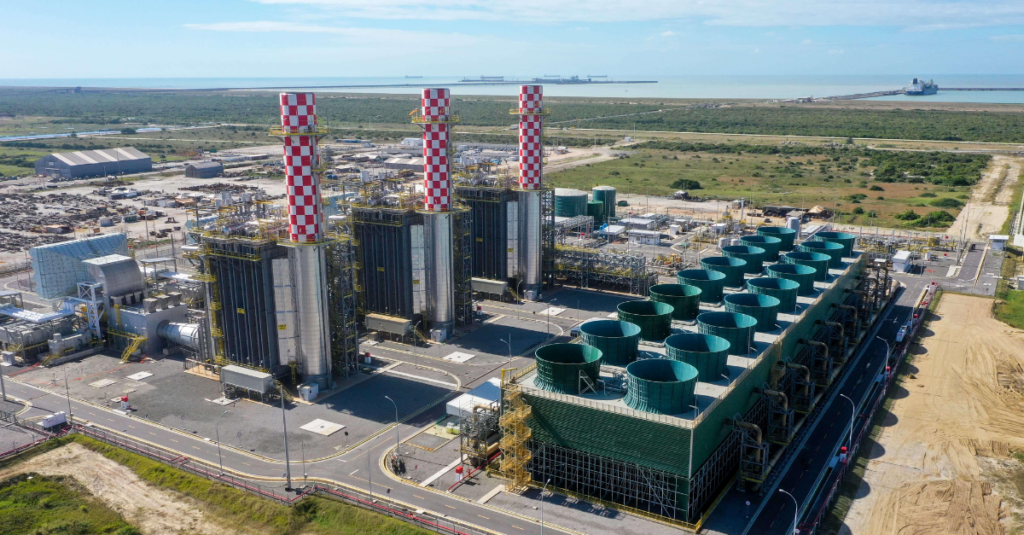
Source: infomoney.com.br | (Courtesy of GNA)
Installed Capacity and Electricity Generation: Two Different Dimensions
One of the most important distinctions in electricity planning is the difference between power and energy.
Power represents the rate at which electricity can be generated at a given moment and is generally expressed in megawatts (MW). Energy refers to the amount of electricity produced over a period of time and is commonly measured in megawatt-hours (MWh).
A power plant with an installed capacity of 500 MW, for example, has a nominal generating capability of approximately that magnitude under specified conditions. However, this does not mean it will continuously generate 500 MW throughout the year.
Its actual generation will depend on technical availability, fuel supply, system requirements, contractual arrangements, and dispatch conditions.
This distinction helps explain why a thermal power plant can play an important role even when its annual electricity generation is relatively limited.
In certain configurations, its value is associated with the ability to supply capacity during critical periods, when other available resources are insufficient to meet demand with the required reliability margin.
In this sense, energy security cannot be assessed simply by adding together the installed capacity of every power plant. It is necessary to determine how much of that capacity will actually be available when it is most needed and which constraints may limit its use.
It is also important to distinguish available capacity from immediate response capability. Not every thermal power plant can be brought online instantly. The time required to start operations, increase generation, or adjust operating conditions varies according to the technology, operating status, and specific characteristics of the facility.
Planning must therefore consider not only the existence of generating capacity but also its actual contribution to meeting system requirements.
The Role of Thermal Power Plants in the Reliability of Brazil’s National Interconnected System
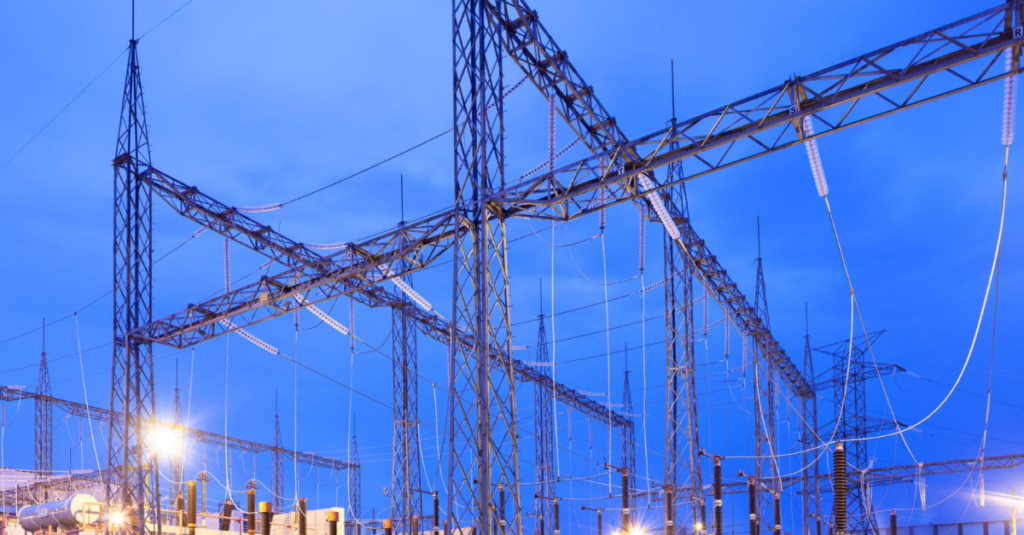
Brazil’s National Interconnected System brings together generation and transmission facilities that enable electricity exchanges between different regions of the country. Operating this system requires continuous decisions about how available resources should be used, taking into account demand conditions, electrical constraints, and generation costs.
Within this framework, Brazil’s National Electric System Operator (ONS) is responsible for coordinating and controlling the operation of generation and transmission facilities connected to the SIN.
Thermal power plants form part of this portfolio of resources and can be deployed under different operating conditions.
During periods of unfavorable hydrological conditions, for example, thermal power dispatch can help reduce pressure on hydroelectric reservoirs. Under other circumstances, units with suitable technical characteristics can help manage load fluctuations or supplement available generating capacity.
The actual contribution of each power plant, however, depends on its location, availability, technical characteristics, and operating conditions.
In its studies of operational challenges facing the electricity system, ONS emphasizes the importance of resources capable of responding to fluctuations in generation and demand, particularly as industrial electricity loads expand and rapid changes in electricity supply must be managed.
This requirement demonstrates that reliability means more than having enough energy on average. The system must also maintain appropriate frequency and voltage conditions, operating reserves, and response capabilities in the event of disturbances.
Thermal power generation can help meet some of these requirements, but it is not the only solution. Hydropower plants capable of adjusting their output, energy storage systems, demand-side management resources, and transmission upgrades are also among the available alternatives.
The challenge is to identify the most appropriate combination of resources based on technical, economic, and environmental criteria.
Operational Flexibility: The Ability to Respond to System Needs
Flexibility has become one of the central concepts in modern electricity planning. In operational terms, it refers to the ability of a system to adjust generation, consumption, and other resources in response to changes in supply and demand conditions.
This capability operates across different timescales. Some fluctuations must be managed within seconds or minutes, while others require decisions made hours, days, or even months in advance.
Natural gas-fired power plants can contribute to this flexibility, although their characteristics vary significantly depending on the technology employed.
Certain gas turbines offer relatively fast startup and ramping capabilities. Combined-cycle facilities, although potentially more energy-efficient, have thermal and operational constraints that must be considered during startup, shutdown, and load adjustments.
Fuel availability also determines how effectively a plant can respond. A thermal power plant technically capable of increasing generation may still face limitations if the required volume of natural gas is not available when needed.
For this reason, a thermal power plant’s flexibility cannot be assessed solely on the basis of its turbines. It depends on the entire supply chain and the contractual conditions that support its operation.
Another important consideration is the relationship between flexibility and efficiency. Frequent startups, partial-load operation, and repeated changes in output can affect specific fuel consumption, maintenance costs, and the environmental performance of a facility.
Response capability must therefore be evaluated alongside the costs associated with the expected operating profile.
Natural Gas Infrastructure Also Determines Generation Security
The availability of a thermal power plant depends on one essential condition: fuel must reach the facility in the quantities and under the conditions required for operation.
This requirement creates a direct connection between electricity planning and natural gas infrastructure.
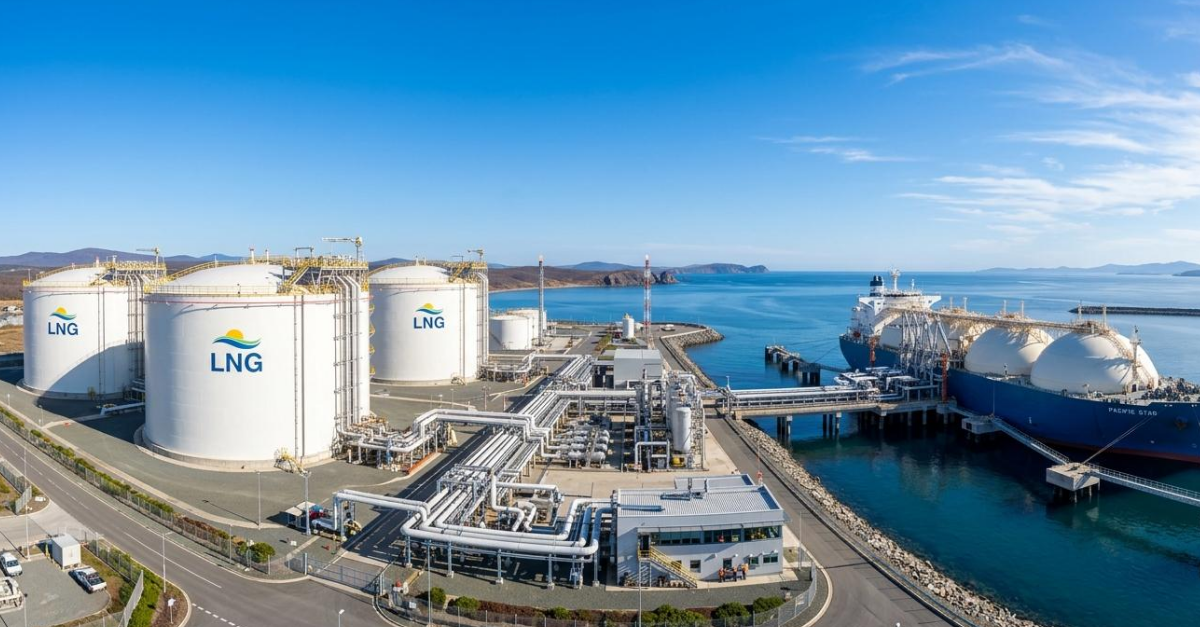
Supply can be arranged through different systems, including pipelines connected to domestic production, imports through international pipelines, and liquefied natural gas (LNG) terminals. Each alternative has its own investment, logistics, contracting, availability, and risk characteristics.
In the case of LNG, natural gas is cooled until it becomes liquid, allowing large volumes to be transported by sea. Upon arrival at the destination terminal, it undergoes regasification before being delivered for use.
This infrastructure makes it possible to diversify supply sources and meet certain flexibility requirements. However, it also introduces factors such as exposure to international prices, cargo availability, terminal capacity, and logistical conditions.
In its Indicative Plan for LNG Terminals (PITER 2021), EPE highlights the historical importance of regasification terminals in accommodating fluctuations in demand from Brazil’s thermal power sector.
This issue is particularly relevant because natural gas consumption by thermal power plants can vary considerably depending on dispatch conditions. A facility that operates for limited periods may require large volumes of fuel when dispatched, making it necessary to have infrastructure capable of meeting this demand without compromising supply security.
This characteristic creates challenges for natural gas contracting. Rigid supply contracts can generate costs even when a power plant is not producing electricity, while more flexible arrangements may involve different prices or risks.
Project location also influences economic and technical feasibility. Proximity to pipelines, LNG terminals, gas processing facilities, and suitable grid connection points can reduce certain infrastructure requirements, but it does not eliminate the need to assess environmental impacts, logistical risks, and operating conditions.
The International Energy Agency (IEA) also emphasizes the relationship between electricity supply security and natural gas deliverability, particularly in systems that depend on thermal generation to meet demand during critical periods.
The energy security of a gas-fired power plant therefore begins before electricity is generated. It involves the integration of fuel supply, logistics, industrial infrastructure, contractual arrangements, and electricity system operations.
Planning and Investment: What Determines the Viability of a Gas-Fired Power Plant?
Developing a natural gas-fired power plant requires an integrated assessment of technical, regulatory, environmental, and economic factors.
Rather than focusing exclusively on construction costs, project development must consider the entire facility lifecycle, from construction and commissioning through operation, maintenance, and eventual decommissioning.
Among the most relevant factors are generation technology, installed capacity, location, grid connection conditions, fuel supply, environmental requirements, and revenue predictability.
The expected dispatch profile also directly influences economic viability.
A power plant designed to operate for many hours throughout the year has a different relationship between fixed and variable costs than one intended to operate primarily during periods of greater system need.
For facilities with low dispatch frequency, investments in equipment and infrastructure must be recovered even during periods when generation is reduced or nonexistent. This characteristic helps explain the importance of capacity procurement and remuneration mechanisms in planning certain electricity resources.
Capacity procurement recognizes that making generating capacity available can provide a valuable service to the electricity system, regardless of the actual volume of electricity generated over the year.
However, designing procurement mechanisms requires careful criteria to avoid unnecessary costs, encourage efficiency, and ensure that contracted resources correspond to actual supply needs.
Risks associated with construction and operation must also be considered.
Delays in permitting, pipeline development, equipment availability, grid connection works, and fuel supply agreements can affect project schedules and costs. Changes in market conditions, electricity demand, and energy policies can also alter a project’s economic outlook over its operating life.
For these reasons, investment analysis for thermal power generation should incorporate demand studies, dispatch scenarios, price sensitivity assessments, regulatory requirements, and risk evaluations.
A technically feasible power plant is not necessarily an economically competitive project. Likewise, a project with apparently favorable financial conditions must demonstrate that it makes a meaningful and justifiable contribution to the electricity system.
Natural Gas and the Energy Transition: A Relationship That Requires Technical Analysis
The role of natural gas in the energy transition involves a discussion that cannot be reduced to a simple opposition between renewable energy sources and fossil fuels.
Natural gas is a fossil fuel, and using it to generate electricity produces carbon dioxide emissions. In addition, its production, processing, and transportation supply chain can generate methane emissions, a greenhouse gas with high global warming potential.
At the same time, the operational characteristics of certain gas-fired power plants can provide important reliability services to electricity systems undergoing transformation.
Environmental assessments must therefore consider both the operational role of a facility and its climate impacts.
Compared with certain coal-fired generation technologies, efficient natural gas power plants can produce lower carbon dioxide emissions per unit of electricity generated. However, the actual climate benefit depends on factors such as plant efficiency, methane emissions across the supply chain, and the fuel being displaced.
The International Energy Agency, in its report The Role of Gas in Today’s Energy Transitions, published in 2019, emphasizes that reducing methane emissions is essential to securing the environmental benefits associated with replacing more carbon-intensive fuels.
This discussion reinforces the need to assess lifecycle emissions rather than considering only those produced during combustion at the power plant.
It is also necessary to distinguish natural gas’s contribution to energy security from its long-term compatibility with decarbonization objectives. Having an important operational role does not mean that unrestricted expansion of fossil fuel generation is the most efficient or environmentally appropriate alternative.
Planning must compare different solutions, including energy storage, flexible demand management, transmission modernization, more effective use of hydropower resources, and lower-emission generation technologies.
In this context, natural gas may serve different purposes depending on the characteristics of each electricity system and the planning horizon under consideration.
The challenge is to avoid both underestimating the services provided by thermal power plants and perpetuating investments that may become incompatible with technological, economic, and climate developments in the sector.
Energy Security Also Depends on Diversifying Solutions
The transformation of Brazil’s electricity sector is expanding the range of technologies capable of contributing to supply reliability.
Battery energy storage systems, for example, can absorb electricity during certain periods and release it later, within the power, energy capacity, and discharge-duration limits of each installation.
Demand response, meanwhile, can enable industrial consumers to adjust part of their electricity consumption according to system conditions, reducing the need for additional generation at certain times.
Transmission expansion and modernization are also essential, as they strengthen integration between regions and enable more effective use of available generation resources.
These solutions are not necessarily direct substitutes in every situation. Each has distinct characteristics in terms of duration, response speed, location, cost, and ability to contribute to electricity security.
A battery designed to discharge over a few hours, for example, does not automatically provide the same service as a power plant with sufficient fuel to operate over extended periods. Conversely, certain energy storage applications may offer operational and environmental advantages over dispatching thermal generation.
A meaningful comparison depends on the service required by the system, rather than on considering each technology in isolation.
The IEA emphasizes that dispatchable generation, energy storage, grid flexibility, and demand response should be assessed together to maintain electricity security during the transformation of energy systems.
For Brazil, this approach is particularly important given the diversity of its electricity mix and regional differences in infrastructure, resource availability, and demand growth.
Planning must identify where each solution can provide the greatest technical and economic contribution, while also considering environmental impacts and implementation risks.
PDE 2036 and the Importance of Integrated Energy Planning
The debate surrounding the contribution of thermal power plants has gained renewed relevance with the publication of the Summary Report of the Ten-Year Energy Expansion Plan 2036, released by Brazil’s Ministry of Mines and Energy and EPE on October 8, 2026.
The document outlines prospects for Brazil’s energy sector from 2027 to 2036, considering demand growth, the adoption of new technologies, and the need to increase system flexibility.
According to EPE, the plan projects approximately BRL 3.3 trillion in energy sector investments over the period analyzed. This figure covers multiple segments of energy infrastructure and should not be interpreted as an investment forecast exclusively for thermal power generation.
The most relevant aspect for the discussion of gas-fired power plants is the need to assess energy supply expansion through an integrated approach.
Growth in installed renewable generation capacity must be accompanied by resources capable of meeting power capacity, flexibility, and operational security requirements. Similarly, the expansion of thermal generation must be assessed in light of fuel costs, emissions, available infrastructure, and the actual contribution of each project.
This means that energy planning cannot be limited to comparing technologies by their nominal capacity or standalone electricity generation costs.
It is necessary to consider the performance of the entire electricity system, including demand patterns, transmission constraints, the complementary characteristics of different generation sources, and the services required to maintain reliability.
The public consultation on PDE 2036, open until November 6, 2026, provides an opportunity for technical discussion of the assumptions and alternatives considered in the planning process. As the document is a version submitted for public participation, its projections should be interpreted as planning scenarios rather than final decisions to implement specific projects.
The Contribution of Gas-Fired Power Plants to Economic and Industrial Development
Reliable electricity supply has implications that extend well beyond the energy sector.
Manufacturing facilities, logistics operations, data centers, and other economic activities depend on adequate electricity availability and power quality to maintain their operations.
Prolonged outages, supply restrictions, and insufficient generating capacity can disrupt production processes, affect investments, and increase the costs associated with operating industrial facilities.
In this environment, generation resources capable of contributing to system reliability have an economic value that extends beyond the price of the electricity they produce.
However, this benefit must be assessed alongside the costs required to keep the infrastructure available.
Investing in energy security involves choosing between alternatives with different technical, economic, and environmental characteristics. The objective of planning should not be to maximize installed capacity indiscriminately, but to ensure an appropriate level of reliability at the lowest possible overall system cost, while respecting sustainability requirements and applicable public policies.
For investors and project developers, this perspective reinforces the importance of understanding the role each project plays within the electricity system.
A natural gas-fired power plant may offer valuable attributes in terms of availability and flexibility, but its competitiveness will depend on its ability to translate those attributes into services that are genuinely needed, technically demonstrable, and economically sustainable.
The Strategic Value of a Gas-Fired Power Plant Lies in Its Contribution to the System
The expansion of Brazil’s electricity sector calls for an increasingly comprehensive view of generation infrastructure.
The discussion surrounding natural gas-fired power plants should not be limited to the amount of electricity they produce, nor should it be based exclusively on their classification as fossil fuel facilities. Although environmental impacts are an essential part of the assessment, it is equally important to understand the operational services these plants can provide and the conditions under which their use is justified.
Available capacity, flexibility, fuel supply security, energy efficiency, operating costs, and emissions are interconnected dimensions of this analysis.
The advancement of renewable energy sources, storage technologies, and demand management mechanisms is expected to progressively change how the electricity system meets its reliability requirements. Throughout this process, the role of thermal power plants will need to be continually reassessed based on technical, economic, and environmental criteria.
For Brazil, the challenge is to develop energy infrastructure capable of supporting economic and industrial growth without compromising electricity supply security or decarbonization commitments.
The strategic importance of a power plant lies not only in the electricity it can generate, but also in the actual contribution it makes to system reliability when that capacity is needed most.
This perspective is essential for guiding planning decisions, investments, and project development in an increasingly complex electricity sector.