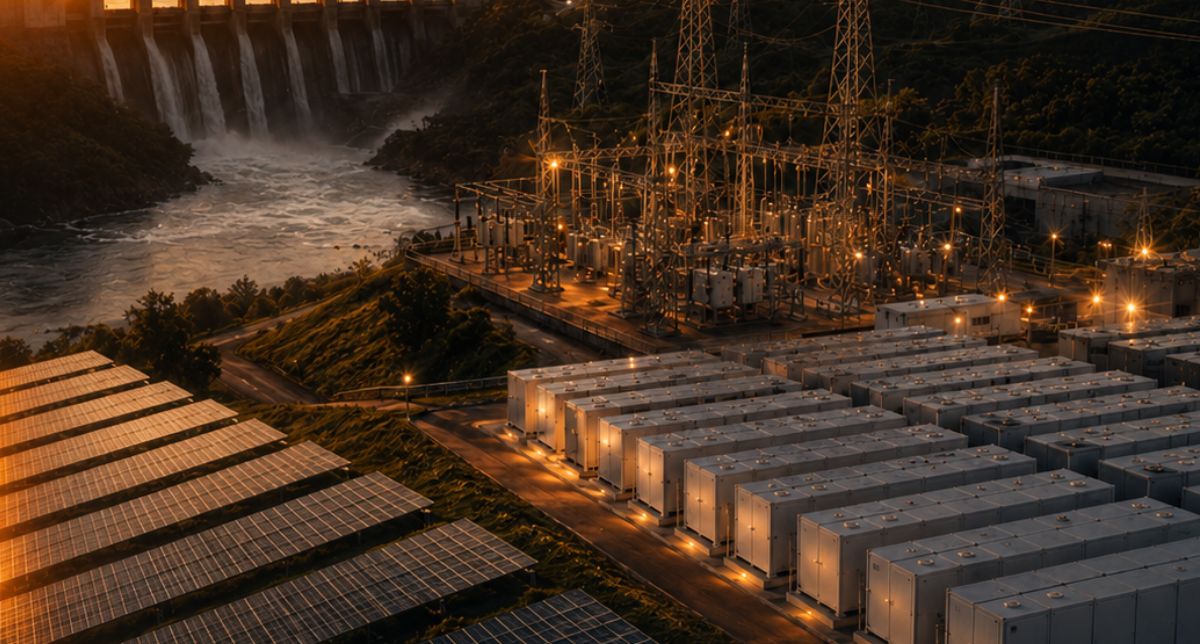
A new IRENA report shows that hybrid solar, wind and battery systems can already deliver firm electricity around the clock at costs that are competitive with, or lower than, those of new fossil fuel plants in favorable regions. The finding shifts the center of the energy debate: the issue is no longer only the cost of standalone renewable generation, but the cost of clean power available when the system needs it
The economic turning point for firm renewable power
For years, the main argument against the accelerated expansion of variable renewable sources was intermittency. Solar and wind were recognized as competitive, clean and scalable, but they still carried the caveat that they could not, on their own, replace the continuous availability of coal, natural gas or fuel oil thermal plants. The question was simple: who delivers power when there is no sun or wind?
The new report from the International Renewable Energy Agency, IRENA, released on May 6, 2026, moves this debate to another level. According to the agency, solar and wind systems combined with battery storage can already provide electricity 24 hours a day, with reliability and competitive costs compared with new fossil fuel sources in regions with strong natural resources. The publication, titled 24/7 Renewables: The Economics of Firm Solar and Wind, addresses the economics of firm renewable power, meaning the ability to deliver clean electricity continuously and dispatchably.
The central point is not only technological. It is economic, strategic and regulatory. IRENA states that the levelised firm cost of electricity from solar-plus-battery systems already ranges from US$54/MWh to US$82/MWh in high-irradiance regions. This range compares with US$70/MWh to US$85/MWh for new coal generation in China and more than US$100/MWh for new gas-fired capacity globally.
In practice, this means the debate about renewables can no longer be limited to the cost of power generated at the moment of production. The more relevant indicator becomes the cost of firm power, considering the investment required to store, modulate and deliver electricity at the time the system demands it. This is where the combination of solar, wind and batteries begins to change the logic of energy planning.
What 24/7 renewable power means
24/7 renewable power does not mean that a single solar plant will generate electricity at night, or that a wind farm will always operate at the same level. The concept refers to hybrid systems capable of combining renewable generation, storage and operational management to deliver power in continuous blocks, reducing exposure to hourly variability.
IRENA evaluates this cost through what is known as the levelised firm cost of electricity. This indicator incorporates not only the cost of building and operating a plant, but also the cost of making variable sources available when the grid needs them. In the case of solar and wind, this includes batteries, capacity oversizing, complementarity between sources and optimization of grid connection use. Reuters highlighted that this concept measures the average cost over the lifetime of a plant, plus the cost of firming intermittent sources to meet system demand.
This distinction is decisive. Over the past decade, solar photovoltaic power and onshore wind have become some of the cheapest sources of new electricity generation. Even so, many power systems continued to rely on thermal plants to meet peak hours, periods of low renewable output or operational security needs. The advance of batteries changes this equation because it allows part of renewable generation to be shifted to hours of higher economic value.
According to IRENA, total installed costs have fallen 87% for solar photovoltaic power since 2010, 55% for onshore wind and 93% for batteries. This simultaneous cost decline in generation and storage creates a new frontier of competitiveness. It is no longer just about producing cheap power, but about delivering clean power with predictability.
Batteries are no longer an accessory. They have become system infrastructure
Battery storage has moved beyond being a complementary solution and has begun to play a structural role in the energy transition. In markets with high renewable penetration, batteries do not simply store surpluses. They reduce curtailment, improve the use of grid connections, shift electricity to higher-price hours and contribute to stability services.
This new role is particularly relevant because power grids were not historically designed to handle a massive presence of variable and distributed sources. Renewable expansion requires transmission, digitalization, flexibility, demand response and storage. IRENA itself, in its 2024 analysis of renewable generation costs, noted that enabling technologies such as batteries, digitalization and hybrid systems are increasingly vital to integrate variable sources, improve asset performance and increase grid responsiveness.
This is what differentiates the current phase of the energy transition from previous stages. The first major renewable wave was marked by the falling cost of solar and wind generation. The second will be defined by the ability to integrate these sources into the power system with security, flexibility and economic predictability.
IRENA projects further cost reductions for solar-plus-storage systems: around 30% by 2030 and approximately 40% by 2035. In the best locations, this could bring firm costs below US$50/MWh.
The impact on coal and natural gas
The comparison with fossil fuels is especially relevant because coal and natural gas still play a central role in the electricity security of many countries. Coal remains present in industrial economies with large baseload demand, while natural gas is often treated as a transition fuel because of its operational flexibility and lower carbon intensity compared with coal.
The IRENA report does not eliminate the complexity of this discussion. Power systems must consider load profiles, transmission availability, cost of capital, market structure, security of supply, permitting, equipment supply chains and regulatory design. But the economic message is clear: in certain regions, new firm renewable assets are already beginning to compete directly with new fossil fuel plants.
This affects investment decisions. A gas or coal thermal plant is exposed to fuel prices, geopolitical risk, emissions costs, regulatory pressure and the possibility of becoming less competitive before the end of its useful life. A renewable system with storage, on the other hand, concentrates its cost mainly in upfront investment, with lower exposure to fuel volatility throughout operation.
This aspect has gained even more weight in a global scenario marked by energy shocks. IRENA linked the relevance of resilient renewable systems to geopolitical risks in oil and gas markets, including tensions and disruptions involving the Strait of Hormuz. The message is that energy security does not depend only on diversifying fossil fuel suppliers, but also on structurally reducing dependence on fuels exposed to external shocks.
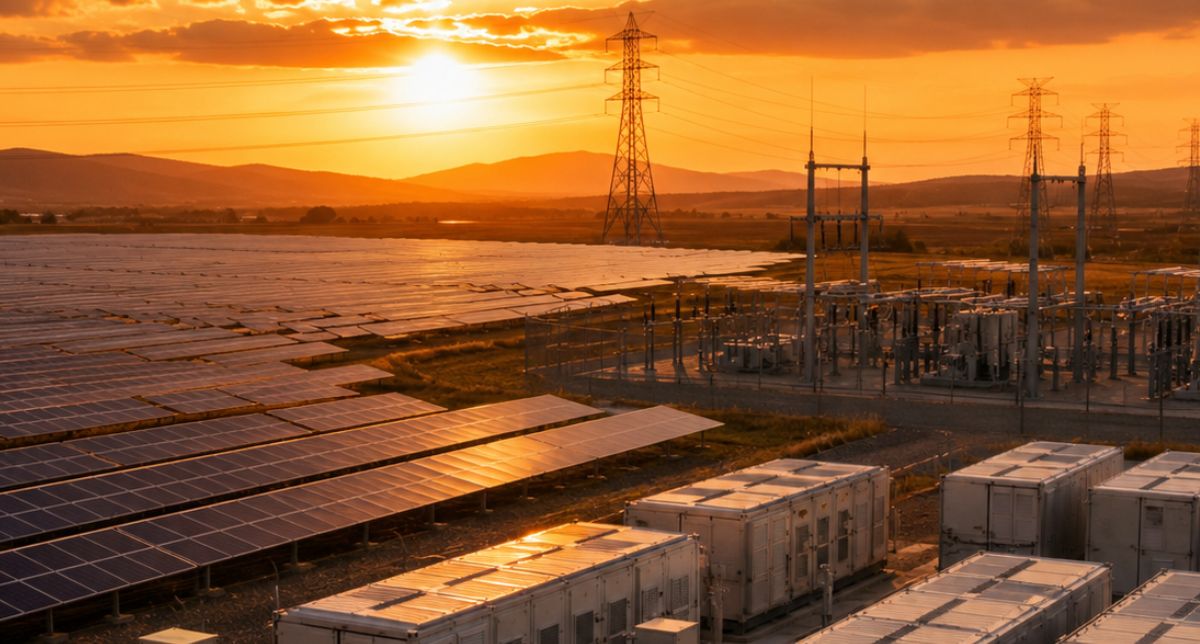
Brazil enters the debate from a different angle
For Brazil, the report requires a careful reading. The country already has a largely renewable electricity mix, with a strong presence of hydropower, expanding solar and wind capacity and a growing debate around storage. Brazil’s challenge is not to replace an electricity mix dominated by coal, as is the case in other markets. The challenge is to preserve security, tariff affordability and reliability in a grid that is increasingly renewable, decentralized and exposed to climate variability.
Even so, the IRENA study has direct implications for Brazilian planning. pv magazine noted that, in 2025, firm costs for wind-plus-storage ranged from about US$59/MWh in Inner Mongolia to US$88/MWh to US$94/MWh in markets such as Brazil, Germany and Australia. The projection is for a decline to an approximate range of US$49/MWh to US$75/MWh in these markets by 2030.
This data is relevant because Brazil is already experiencing significant growth in variable renewables and transmission constraints in certain regions. At times, the system needs to limit renewable generation because of grid bottlenecks, a phenomenon known as curtailment. At other times, it needs to dispatch thermal plants to guarantee supply during critical hours or unfavorable hydrological periods.
Batteries can act as a bridge between these two realities. They make it possible to capture renewable power that might otherwise be wasted, deliver electricity during hours of greater need and reduce part of the dependence on thermal dispatch in specific moments. For this to happen, however, the country needs to advance in remuneration models, locational signals, ancillary services, demand response, well-designed auctions and clear rules for storage.
The signal for investors
IRENA’s conclusion has a direct reading for investors: firm renewables are now being evaluated not only as climate assets, but as competitive energy infrastructure assets. This changes the risk and return profile of hybrid projects.
For a long time, solar and wind projects were analyzed mainly by the cost of generated electricity, resource quality, power purchase agreements and grid connection. Now, the combination with storage adds new layers of value: hourly arbitrage, reduced exposure to negative or low prices, delivery during peak hours, 24/7 contracts with large consumers, grid support and the ability to serve sectors that require continuous supply.
IRENA also points out that hybrid systems can be relevant for energy-intensive consumers, including data centers and applications linked to artificial intelligence, which demand continuous and reliable electricity. This point is strategic because the expansion of digitalization and AI increases pressure on power systems, especially in markets where demand is growing faster than generation and grid infrastructure.
For capital, this means that renewable assets are no longer competing only on average price. They are also competing on quality of delivery. The premium will not be only in generating clean power, but in delivering clean power at the right time, with contractual predictability and the ability to reduce supply risks.
Falling costs do not solve everything
Despite the economic progress, the transition to 24/7 renewables will not happen automatically. IRENA notes that challenges remain in financing, permitting, supply bottlenecks, geopolitics and regulatory design. In its 2024 renewable generation cost report, the agency observed that although 91% of new utility-scale renewable capacity generated power below the cost of the cheapest fossil fuel alternative, obstacles remain, including access to capital, permitting delays, supply chain bottlenecks and geopolitical risks.
This caveat is important. The fact that a technology is cost-competitive does not mean it will be deployed at the necessary speed. The cost of capital remains a dividing line. In emerging countries, renewable projects may face higher interest rates, currency risk, difficulties in securing long-term financing and regulatory uncertainty. The same project that is highly competitive in a market with cheap capital may become less attractive in another with higher financing costs.
In addition, batteries still depend on sensitive mineral and industrial supply chains. Lithium, nickel, cobalt, graphite, power electronics, inverters and control systems are all part of an emerging industrial geopolitics. The cost declines observed so far have been significant, but the continuation of this trajectory will depend on scale, innovation, recycling, supplier diversification and consistent industrial policies.
Clean energy enters the energy security agenda
Perhaps the most important aspect of the report lies in the change of language. Renewables are no longer presented only as a climate solution. They are now being treated as an instrument of energy security, industrial competitiveness and protection against fuel shocks.
This shift matters because energy policy has always been guided by three pillars: cost, security and sustainability. For decades, fossil fuels were defended as necessary to guarantee security, even with environmental impacts and price volatility. The new renewable frontier challenges this separation. If solar, wind and batteries can deliver firm power at competitive costs, energy security now has a clean and economically defensible alternative.
This does not mean that all systems will abandon fossil fuels in the short term. The transition will be uneven, with differences between countries, regions, demand profiles and grid structures. But the argument that renewables are structurally incapable of providing reliable power becomes weaker as firm costs fall and hybrid projects gain scale.
What changes by 2035
IRENA’s projection through 2035 indicates that the next decade will be decisive. If firm costs fall below US$50/MWh in the best locations, renewable projects with storage could directly compete for new fossil fuel investments in several markets. This competition will not be only environmental. It will also be financial.
For countries with strong solar and wind resources, the opportunity is to build a competitive advantage around firm clean power. This includes attracting energy-intensive industries, producing clean fuels, reducing fossil fuel imports, increasing economic resilience and improving price predictability.
For Brazil, the topic should enter the debate on energy planning, transmission expansion, auctions, power market liberalization and new contracting products in a more structured way. The country has a renewable base, hydropower experience, relevant solar and wind resources, biomass, biogas, biomethane and a growing industrial decarbonization agenda. Storage can be an element of integration between these fronts.
The challenge lies in transforming potential into a market. This requires regulation that recognizes the value of flexibility, contracts that remunerate firmness and capacity, economic signals for efficient asset location and coordination between generation and grid expansion.
A new metric for the energy transition
The main contribution of IRENA’s report is to propose a more mature metric for the energy transition. It is not enough to compare the cost of a standalone solar plant with a thermal plant. What increasingly matters is comparing systems capable of delivering power at the standard required by the real economy.
When solar, wind and batteries begin to compete in 24/7 supply, the discussion moves away from the viability of renewables and toward the speed at which markets, grids and regulation can adapt.
The energy transition is therefore entering a phase that is less rhetorical and more structural. The central question is no longer whether renewable power can be cheap. The data from the past decade has answered that clearly. The new question is whether it can be firm, resilient and competitive at the same time.
IRENA’s answer, based on the data available in 2026, is that in many regions this frontier has already begun to be crossed. For governments, investors and large consumers, ignoring this shift could prove costly. Not only in terms of emissions, but also in competitiveness, energy security and strategic positioning in the low-carbon economy.