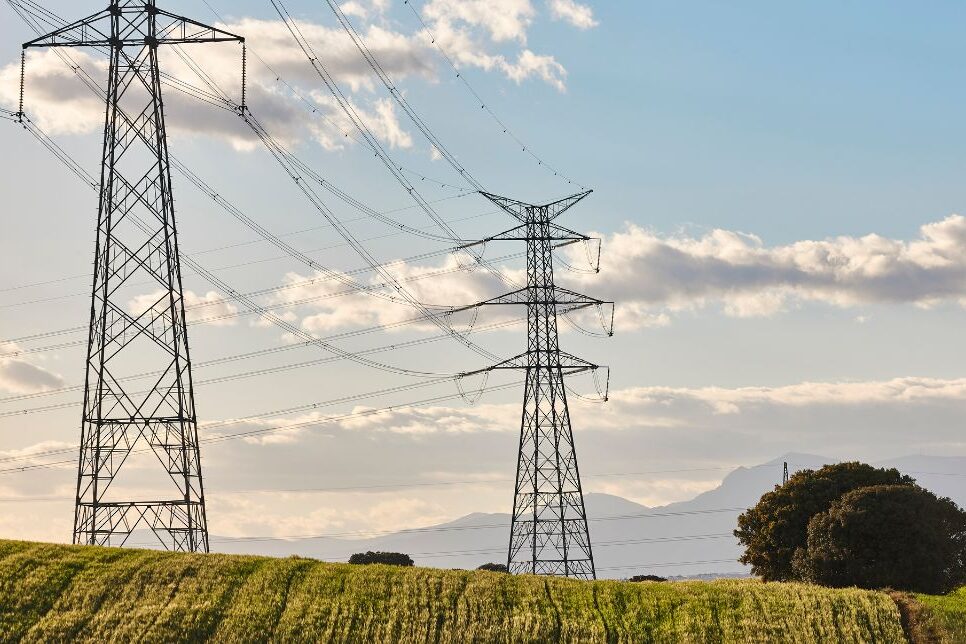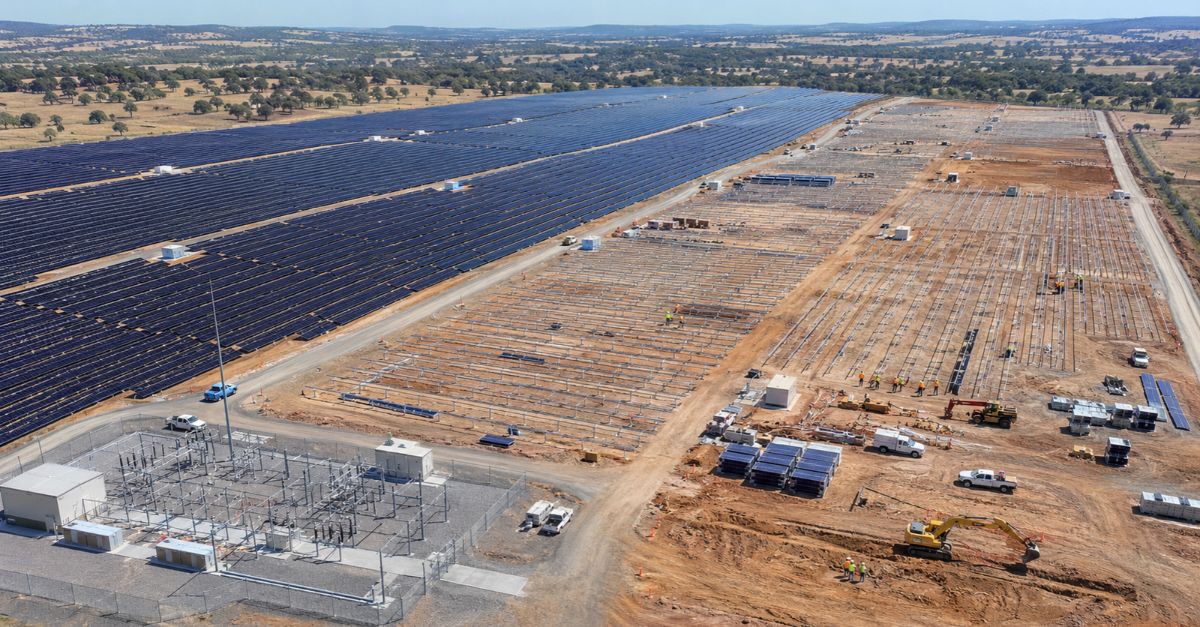
The energy sector is often presented through impressive figures. Gigawatts in development, extensive project portfolios, planned investments, and installed capacity projections all help illustrate the scale of ambitions for infrastructure expansion.
These indicators provide valuable information, but there is a fundamental difference between announcing a project and delivering an operational asset.
Not every announced megawatt becomes a built megawatt. Understanding that distinction is essential when assessing the maturity of energy investments.
Developing a project involves successive decisions related to engineering, regulation, permitting, grid connection, financing, and execution. Each stage provides additional insight into the project’s viability and may reveal conditions that were not apparent when the opportunity was first identified.
For this reason, assessing the sector solely on announced capacity can provide an incomplete picture of the actual progress of energy infrastructure development.
Planned installed capacity is not the same as actual energy generation
A project’s power capacity, typically expressed in megawatts (MW), represents its rated output under defined conditions. The energy actually generated, however, depends on factors such as resource availability, technology characteristics, equipment performance, and operating conditions.
Even after construction, two projects with the same installed capacity may deliver different energy outputs.
Before a project becomes operational, this distinction is even more important. Announced capacity does not guarantee that a facility will be built, that grid connection will be available within the expected timeframe, or that its energy can be sold under the conditions initially projected.
The same caution applies to project portfolios. Aggregated planned capacity indicates the scale of a group of opportunities, but it does not demonstrate that all projects have reached the same stage of development.
A large-capacity portfolio may include projects with significantly different levels of technical, regulatory, and financial maturity.
From opportunity to operational asset: critical stages cannot be overlooked
Developing power generation projects requires progression through several stages, whose characteristics vary depending on the technology, location, and applicable regulatory framework.
From a project management perspective, this process can be organized into the following assessment stages:
- Opportunity identification: initial assessment of the energy resource, location, and potential commercial applications.
- Preliminary studies: evaluation of technical alternatives, development cost estimates, and identification of constraints.
- Regulatory and environmental development: procedures related to authorizations, environmental permitting, and applicable requirements.
- Grid connection assessment: studies and procedures required to secure access to electricity infrastructure.
- Economic and financial structuring: definition of capital requirements, revenues, contracts, risks, and funding sources.
- Construction and implementation: execution of construction works, procurement and installation of equipment, and system integration.
- Commissioning and operation: technical inspections, testing, and commencement of operations under the required authorizations.
This sequence represents a project management framework rather than a single mandatory regulatory procedure applicable to every technology. In practice, several activities may take place simultaneously, and certain requirements vary according to the type of project.
The central point remains: each stage involves decisions that influence whether the original opportunity can ultimately become an operational asset.
Regulatory authorization matters, but it does not resolve every development requirement
In Brazil’s electricity sector, the National Electric Energy Agency (ANEEL) is responsible for receiving and reviewing applications related to the development of power generation projects, according to the applicable category, capacity, and regulatory requirements.
Official information on this subject is available on the ANEEL Generation Authorizations page.
However, obtaining regulatory authorization should not be interpreted as confirmation that all technical, environmental, commercial, and financial conditions have been resolved.
Project development remains subject to fulfilling specific obligations, securing grid connection where applicable, structuring contracts, and obtaining the capital required for construction.
This is one reason why maturity assessments must distinguish between progress in documentation and the practical conditions required for execution.
A project may have advanced in one area while still depending on major decisions in others.

Grid connection: a decisive factor for power generation projects
Access to electricity infrastructure is an important component of the viability of projects connected to the power system.
A facility may have excellent energy resource potential but still require technical studies, grid upgrades, additional infrastructure, or other measures to connect to the network and deliver its electricity output.
Brazil’s Energy Research Office (EPE) explains that transmission expansion planning involves technical, economic, and socio-environmental assessments to identify alternatives capable of meeting the system’s needs.
These assessments matter because generation infrastructure and the transmission infrastructure required to deliver its output must have compatible development and operating conditions.
A project’s schedule cannot be assessed in isolation when its commissioning depends on works or procedures beyond the project developer’s direct control.
From an investor’s perspective, it is also important to understand which obligations fall under the developer’s responsibility, which depend on other stakeholders, and which risks may affect the expected commercial operation date.
What turns a technically feasible project into a bankable one?
An opportunity may demonstrate attractive technical potential without yet meeting all the conditions required to secure financing.
Financial institutions must assess repayment capacity, risk exposure, and proposed guarantees. Developers, in turn, must demonstrate consistency between capital investment, operating costs, schedules, and expected revenues.
The BNDES Finem – Energy Generation program supports investments related to the development and expansion of power generation facilities, subject to the bank’s established eligibility criteria.
Eligible financing items may include studies and engineering projects, civil works, installations, equipment, and certain pre-operational expenses.
This structure highlights an important characteristic of infrastructure projects: capital investment extends far beyond purchasing the core technology.
Different financial structuring models are also available.
Project finance, for example, is a financing structure in which debt repayment is contractually supported by the project’s cash flow, with its assets and receivables forming part of the collateral package.
In its institutional presentation of the Project Finance program, BNDES establishes specific conditions related to corporate structure, cash generation, and debt service capacity.
These requirements apply to the financing arrangement offered by the bank and should not be interpreted as universal requirements for all energy projects.
Bankability depends not only on the projected value of an asset but also on the strength and consistency of the assumptions supporting its development and revenue-generating capacity.
Contracts, revenues, and risks: the financial engineering behind a project
Beyond technical assessment, project structuring requires a clear understanding of how revenues will be generated and which commitments must be established to make execution viable.
Depending on the business model, revenue predictability may be linked to power purchase agreements, supply contracts, regulatory mechanisms, or other forms of compensation.
These arrangements have different characteristics and should not be treated as interchangeable.
A comprehensive assessment considers questions such as:
- Total investment: how much capital is required to complete the project, including contingencies?
- Schedule: which milestones must be achieved before operations can begin?
- Revenues: what are the expected revenue streams and their associated risks?
- Operating costs: what expenses will be required to keep the asset operational?
- Counterparties: which contractual obligations must be fulfilled by suppliers, contractors, and buyers?
- Financing: what are the terms governing debt, equity, guarantees, and repayment?
- Risks: which events could affect capital requirements, construction timelines, and operating performance?
Answering these questions makes it possible to develop a more robust project assessment.
It also helps explain why seemingly similar projects may have very different risk profiles and financing conditions.
Environmental permitting and project execution must move forward together
Environmental permitting is an important responsibility for many infrastructure projects, depending on the nature of the activity and applicable legislation.
This aspect should not be viewed merely as an administrative requirement.
Environmental studies may identify site-specific constraints, alternative development approaches, and measures required to prevent, mitigate, or offset impacts.
The findings of these processes may influence engineering decisions, construction planning, costs, and schedules.
For this reason, a maturity assessment must consider not only the existence of documents but also the status of permitting processes, applicable conditions, and outstanding responsibilities.
When environmental and social risks are properly identified and addressed during development, project developers gain more reliable information to support subsequent decisions.
This does not eliminate uncertainty, but it contributes to more responsible project structuring.
Why does the project schedule matter as much as planned capacity?
The economic value of a project may be affected by when it begins operating.
Delays can postpone revenue generation, increase certain costs, and require adjustments to the financial structure. The extent of these effects depends on contractual terms and the specific circumstances of the project.
Factors that may influence the schedule include construction progress, equipment procurement, grid connection, compliance with regulatory and environmental requirements, and completion of the tests required before operations begin.
For this reason, projected commercial operation dates should be understood as planning assumptions subject to conditions and risks, rather than guaranteed outcomes.
In infrastructure development, the ability to execute matters just as much as the ability to plan.
How can the maturity of a project portfolio be assessed?
From a management perspective, projects can be classified according to their progress across key development dimensions, without replacing project-specific technical and financial assessments.
Areas that warrant ongoing monitoring include:
- Quality and currency of engineering studies.
- Status of regulatory authorizations and obligations.
- Progress of applicable environmental permitting procedures.
- Grid connection conditions and required infrastructure.
- Commercial structure and revenue predictability.
- Capital availability and financing conditions.
- Maturity of construction and implementation contracts.
- Schedule reliability and risk management mechanisms.
This approach makes it possible to distinguish the total scale of identified opportunities from the projects that have reached more advanced stages of development.
It also supports more accurate corporate communication.
When reporting a project portfolio, it is important to clarify what the published figure actually represents: identified potential capacity, projects under study, authorized developments, facilities under construction, or operational assets.
These categories are not interchangeable and must be described using consistent criteria.
Transparency about project maturity is also a matter of governance
Information about energy projects is important to investors, lenders, partners, and other market participants.
Communications that report only total capacity may fail to reveal significant differences between development stages.
By contrast, clearly distinguishing estimates, forecasts, confirmed commitments, and actual results contributes to a more accurate understanding of disclosed information.
This does not mean diminishing the importance of early-stage projects. Identifying new opportunities is an essential part of energy infrastructure development.
What matters is presenting these projects according to their actual characteristics and maturity, without portraying a future possibility as an accomplished result.
Transparency also strengthens internal monitoring. Indicators covering regulatory, technical, financial, and construction progress can provide a more comprehensive view of portfolio development.
What truly determines the quality of an energy project portfolio?
No single indicator can fully represent the quality of an energy project portfolio.
Planned capacity helps establish the scale of potential opportunities. However, the ability to turn those opportunities into operational assets depends on the combined strength of technical feasibility, infrastructure availability, regulatory compliance, permitting, financial structuring, and execution.
For the energy sector, this reinforces the importance of assessing investments from a perspective that goes beyond announced nameplate capacity.
Projects must be developed, assessed, financed, built, and operated. Each stage requires specific decisions and capabilities.
The true progress of an energy project portfolio is measured not only by the number of megawatts planned but also by the maturity of the conditions required to turn that capacity into real infrastructure.
The challenge of developing energy infrastructure does not end when an opportunity is identified.
That is precisely when the work begins to turn it into a project capable of operating, meeting demand, and creating long-term value.