Climate change is beginning to alter the assumptions underlying Brazil’s power sector planning, broadening the debate around resilience, infrastructure, energy storage, regulation, and energy security.
The advance of climate change is adding a new dimension to the planning of Brazil’s power sector. Beyond reducing emissions and expanding the share of renewable energy sources, the country will need to prepare its generation, transmission, distribution, and system operations for droughts, heavy rainfall, heat waves, wildfires, and other events capable of simultaneously affecting supply, demand, and the integrity of electricity infrastructure. Discussions held this week by ANEEL, ONS, and EPE indicate that climate adaptation is beginning to occupy an increasingly important place on the sector’s technical and regulatory agenda.
Climate change is beginning to reshape the assumptions behind energy planning
For decades, planning the expansion and operation of the power system meant working with projections for economic growth, demand trends, the availability of energy resources, technology costs, infrastructure investment, and a range of scenarios designed to address the inherent uncertainties of a long-term sector.
Climate change adds a particularly complex variable to this process. The challenge lies not only in the prospect of higher temperatures or changes in average precipitation levels. More importantly, it lies in the combination of gradual shifts and extreme events that can simultaneously affect generation, electricity networks, power demand, and operating conditions.
This discussion gained greater visibility this week.
On August 20, the Brazilian Electricity Regulatory Agency, ANEEL, hosted the event “Super El Niño and the Resilience of Brazil’s Power Sector,” bringing together government representatives, researchers, industry participants, and experts to discuss the effects of extreme climate events on the power system and the mechanisms required to strengthen its preparedness and response capabilities. The program covered climate projections, power system operations, transmission, utility contingency plans, generation under extreme scenarios, and grid operation coordination.
One day earlier, on August 19, the Energy Research Office participated in the 3rd Regulatory Week organized by the National Electric System Operator. According to EPE, the event addressed regulatory challenges associated with the transformation of the power sector and included climate resilience among the central topics under discussion.
The proximity of these two debates is significant because it shows that climate issues are beginning to move beyond the strictly environmental sphere. They are becoming directly connected to energy planning, reliability, regulation, infrastructure expansion, and security of supply.
The issue at hand, therefore, extends well beyond preparing for a specific weather phenomenon.
The power sector will need to learn how to plan for a climate that may no longer reproduce past patterns with the same degree of regularity.
A renewable power system that remains deeply connected to the climate
Brazil enters this discussion from a unique position. The high share of renewable sources in electricity generation is a strategic advantage for the energy transition, but it also creates a particularly close relationship between the power system and natural conditions.
According to the Brazilian Energy Balance 2026, published by EPE, renewable sources accounted for 86.8% of Brazil’s electricity mix in 2025. Wind and solar photovoltaic power together already represented 26.4% of the country’s electricity generation.
This process has diversified a power mix historically characterized by a strong dependence on hydropower. The expansion of solar, wind, biomass, distributed generation, and other renewable alternatives reduces the concentration of supply in a single source and creates new options for meeting demand.
At the same time, the high share of energy resources that depend on natural conditions means that understanding the climate is becoming increasingly important to understanding how the power system itself operates.
In the case of hydropower, changes in rainfall patterns can alter river flows, reservoir inflows, and storage patterns. The challenge does not necessarily mean that there will be less water in every region or at all times. Climate change can produce different effects across the country and throughout the year, including more severe droughts in certain areas, concentrated rainfall, flooding, and greater hydrological variability.
For an interconnected power system of continental scale, that variability matters.
EPE has already been incorporating this issue into its studies. In material dedicated to the relationship between hydropower and climate change, the agency states that Brazil’s Ten-Year Energy Expansion Plan uses thousands of hydrological scenarios to represent different future possibilities and that sensitivity analyses are being conducted to assess how the system performs under critical water-scarcity events.
This development is important because it gradually changes a traditional planning assumption.
Historical data will remain essential. However, relying exclusively on the statistical repetition of the past may prove insufficient in a context where the probability distributions associated with certain events may themselves be changing.
Planning for climate risk therefore means broadening the range of scenarios considered and testing the system’s ability to continue operating when different adverse conditions occur.
The challenge extends far beyond generation
Much of the public discussion about climate and electricity tends to focus on generation. The relationship is intuitive. Lack of rainfall affects hydropower plants, changes in wind conditions influence wind farms, and shifts in cloud cover and temperature affect the performance of solar systems.
But the resilience of the power system depends on a much broader chain.
Electricity must be generated, transmitted, distributed, and delivered to consumers. Each of these stages has its own specific vulnerabilities.
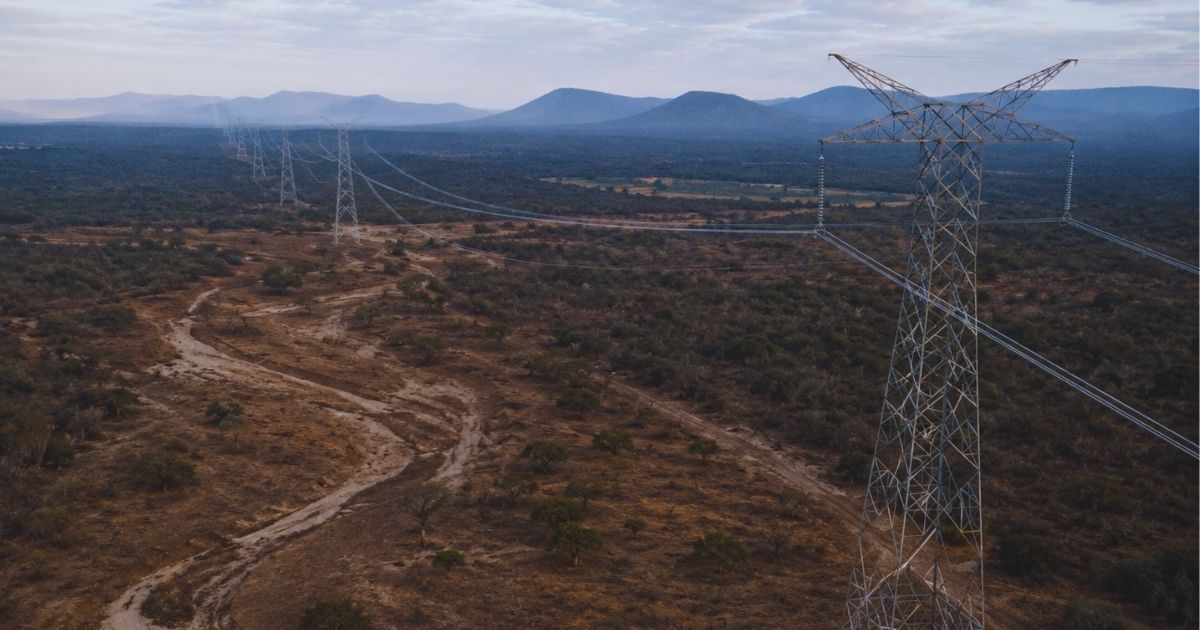
Brazil’s transmission network spans approximately 190,000 kilometers and supplies more than 99% of the country’s electricity load, according to an EPE study on transmission and climate change. Much of this infrastructure is overhead and remains continuously exposed to environmental conditions.
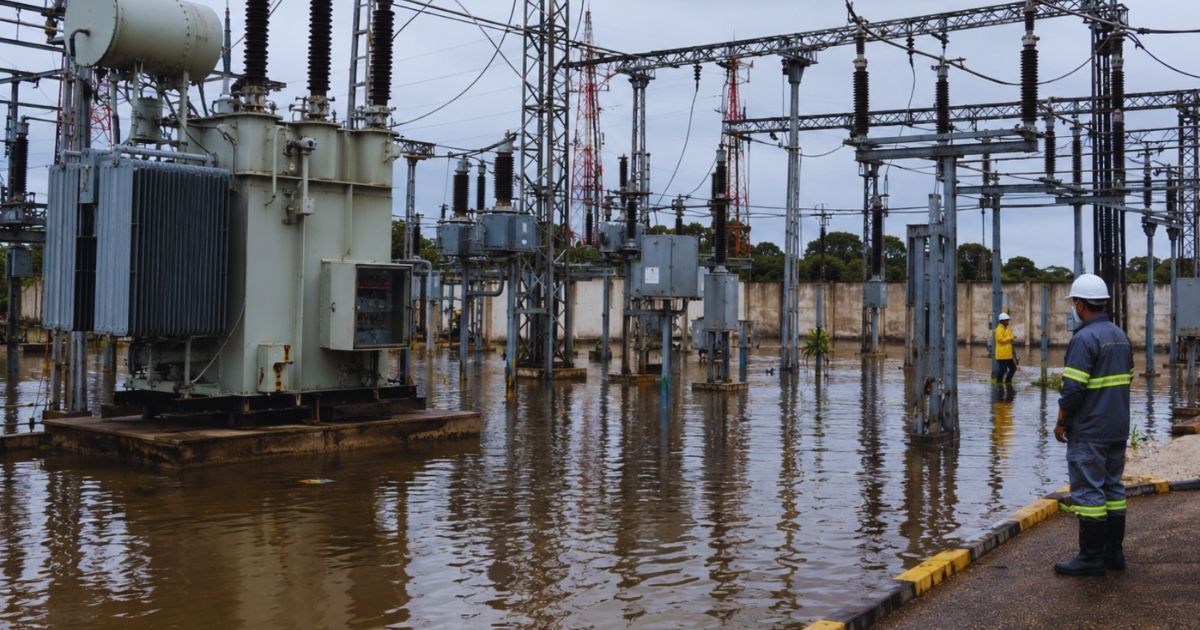
Heavy rainfall can cause flooding, ground movement, and access difficulties at facilities. Severe winds can damage structures and bring vegetation or debris into contact with power lines. Wildfires increase risks near transmission corridors. Lightning, extreme temperatures, and storms create additional challenges for equipment and system operations.
At the distribution level, the proximity of networks to trees, buildings, roads, and densely populated areas increases the diversity of risks.
In an extreme situation, the problem does not end when the rain stops or the winds subside. Affected areas must be reached, damage identified, equipment replaced, crews mobilized, and power safely restored. When roads are blocked or areas remain flooded, recovery can become significantly more complex.
The events that struck Rio Grande do Sul between April and May 2024 demonstrated this systemic dimension in concrete terms. In its resilience studies, EPE notes that the historic heavy rainfall and flooding affected approximately 2.4 million people and also had impacts on electricity consumption and infrastructure.
This helps explain why the resilience debate must move beyond the analysis of energy resources to encompass the entire infrastructure system.
It is not enough to ask how much electricity can be generated.
It will also be necessary to ask whether that electricity can reach consumption centers under different climate conditions, which assets are most vulnerable, how long the system takes to recover from an outage, and what redundancies need to be in place to reduce the impact of localized failures.
Heat waves also create pressure on the demand side
There is another variable that makes climate adaptation even more complex. Weather conditions affect not only electricity supply. They can also change demand.
Prolonged heat waves increase the use of air-conditioning and cooling systems in homes, offices, shopping centers, hospitals, industrial facilities, and public buildings. This can create demand peaks precisely when certain components of the electricity infrastructure are also being exposed to high temperatures.
In December 2025, EPE, ONS, and CCEE published a dedicated study on the impacts of climate change on electricity demand. The document specifically highlights rising temperatures and heat waves and their potential effects on demand peaks associated with air conditioning and cooling.
This relationship adds an important layer to planning.
The system must be prepared not only for changes in the availability of resources used for generation, but also for shifts in when electricity is demanded and in the intensity of that demand.
The issue becomes even more relevant as the electrification of the economy advances. Electric vehicles, electrified industrial processes, data centers, digital equipment, and new loads are likely to increase the importance of electricity in overall energy consumption.
In other words, the more activities depend on the power system, the greater the economic and social impact of potential outages.
In this context, resilience is no longer merely a technical characteristic of the grid. It becomes a component of economic security itself.
Diversification is also becoming a form of risk management
The diversification of Brazil’s electricity mix is usually analyzed from two main perspectives: decarbonization and supply expansion.
Climate change adds a third: risk management.
Different energy sources respond differently to weather conditions, have distinct generation profiles, and are geographically distributed across regions with their own characteristics. A more diversified portfolio can reduce the system’s exposure to certain adverse conditions, provided that this expansion is accompanied by adequate networks, control capabilities, planning, and flexibility mechanisms.
This perspective broadens the strategic significance of sources such as solar, biomass, biogas, and other renewable solutions.
Power generation from biomass and biogas, for example, has an important characteristic in this debate: depending on project configuration and fuel availability, it can provide dispatchable generation from storable resources. In an increasingly diversified system, technologies with different operating characteristics can play complementary roles.
This does not mean that any single energy source is, by itself, an answer to climate risk.
Every resource has its own vulnerabilities. EPE itself has been separately studying the potential impacts of climate change on hydropower, transmission, solar generation, wind generation, thermal generation, and electricity demand.
The central point is different.
Resilience does not simply result from replacing one technology with another. It depends on the combination of resources, location, infrastructure, response capacity, and operational diversity.
This understanding will become increasingly important in a power system with a high share of renewable energy.
Energy storage takes on a broader strategic role
It is within this context that energy storage takes on a particularly important role.
Batteries are frequently associated with the integration of solar and wind power because they can absorb electricity during certain periods and return it to the system when needed. But their potential role is broader.
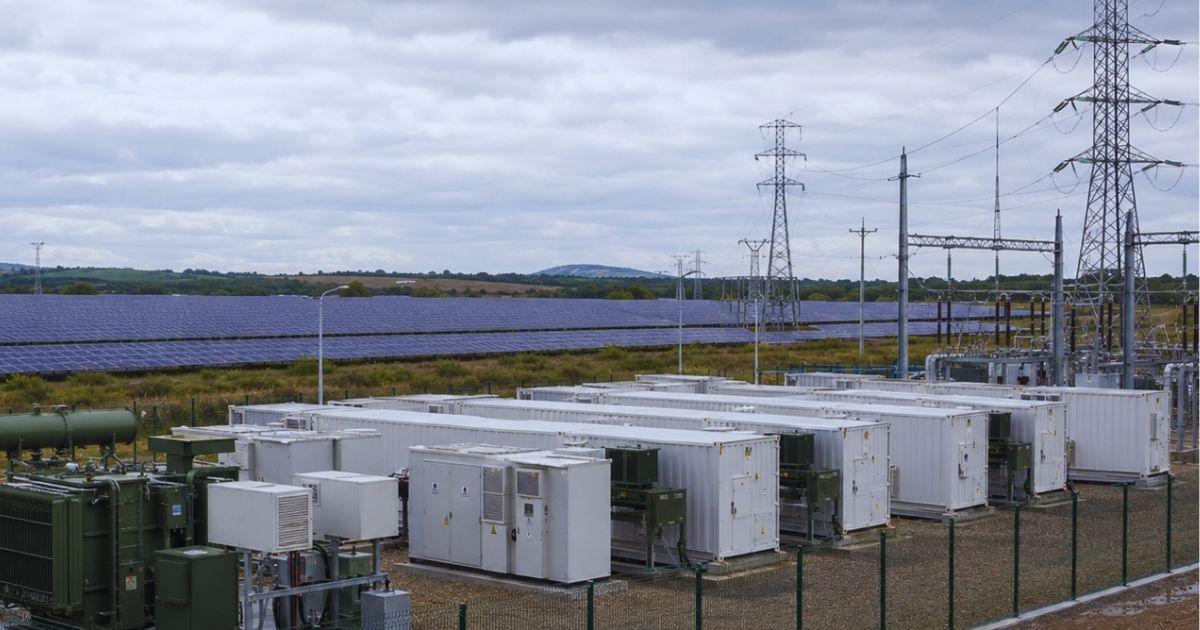
Storage systems can provide operational flexibility, respond rapidly to changes in load and generation, shift energy between different periods of the day, and expand the range of options available to system operators.
This capability becomes increasingly valuable as the electricity mix becomes more diversified and operating conditions more complex.
Brazil is currently moving forward with the development of its first auctions specifically designed for battery storage.
In July, ANEEL opened a public consultation on the draft rules for the first energy storage auctions in Brazil. The auctions are scheduled for December 2 and 4, 2026, with 15-year contracts and supply beginning in August 2028. Systems will be required to have at least 30 MW of capacity, a four-hour duration, and the ability to respond to centralized dispatch by ONS.
Brazil’s Ministry of Mines and Energy has also emphasized that these systems will be able to store electricity and deliver it when the system needs it most, helping both to meet demand and to manage surplus renewable generation.
The progress of this agenda shows that the energy transition requires more than simply building new generation capacity.
A secure system must be able to move energy through space, using electricity networks, but increasingly also through time, using storage, demand management, dispatchable generation, and other flexibility resources.
From a climate resilience perspective, this capability makes the system better prepared to operate under conditions that differ from those originally anticipated.
Regulation will need to incorporate a new understanding of risk
Perhaps one of the most profound transformations brought about by climate change will not be technological, but regulatory, affecting the rules that guide investment and decision-making.
Electricity infrastructure is designed to operate for decades.
A transmission line, substation, power plant, or other asset installed today will remain exposed for many years to the environmental conditions of the location where it was built. If those conditions are changing, the parameters used to design, locate, and operate these assets will also need to be continuously reassessed.
This is where climate resilience and regulation begin to converge.
The debate may involve technical design criteria, reliability standards, asset redundancy, contingency planning, digitalization, monitoring, preventive maintenance, vegetation management, recovery capacity following extreme events, and the economic recognition of investments aimed at adaptation.
The economic dimension is particularly important.
Resilience investments have a distinctive characteristic: when they work, many of their benefits are reflected precisely in what did not happen. A substation that remained operational during a flood, a network that rapidly isolated a fault, or a redundant system that prevented a larger-scale outage all create value by reducing potential losses.
The regulatory challenge is to create conditions in which economically justified preventive measures can be considered before damage occurs, without turning resilience into a generic justification for any increase in costs.
This will require better data, risk assessments, metrics, and transparent criteria.
International experience also points in this direction. The Intergovernmental Panel on Climate Change identifies measures such as revising engineering standards, strengthening existing facilities, building redundancy and robustness, and improving operational preparedness to maintain services during extreme events as adaptation measures for energy infrastructure.
The objective, therefore, is not simply to build more resistant infrastructure.
It is to develop systems capable of anticipating risks, absorbing impacts, continuing to operate as far as possible, and rapidly restoring their functions.
Climate planning is already beginning to appear in long-term policies
The discussions held in August are not taking place in isolation.
In recent years, EPE has been developing a Roadmap for Strengthening the Resilience of the Power Sector in Response to Climate Change, prepared within the framework of the Recovery Plan for Hydropower Reservoirs with Regulation Capacity.
The initiative brings together a technical review of climate resilience and a series of thematic studies focused on different components of the power system.
An even more significant development can be found in the proposed National Energy Transition Plan.
Among the measures outlined in the documents submitted by the government for public consultation are the production and systematization of information on climate change, the development of resilience studies for the energy system, improvements to hydrological scenario models, the adoption of tools to incorporate climate data into planning, and, particularly importantly, the integration of climate risk into energy expansion studies.
This evolution suggests a methodological shift.
Rather than treating climate change merely as an environmental externality of energy production, planning is beginning to recognize it as a variable capable of altering the future performance of the assets themselves.
This brings together two agendas that were long discussed separately.
On one side is mitigation, aimed at reducing emissions and limiting the progression of global warming.
On the other is adaptation, designed to prepare infrastructure, institutions, and societies for impacts that can no longer be entirely avoided.
In the power sector, the two are inseparable.
Digitalization and information will become part of resilience infrastructure
Preparing the power system for more complex climate conditions will not depend solely on new power plants, batteries, or more robust networks.
Data will play an increasingly important role in this process.
Weather forecasting, hydrological monitoring, sensors installed on equipment, satellite imagery, vegetation monitoring, wildfire detection systems, asset-condition analysis, and load forecasting models can all improve the ability to anticipate problems.
Digitalization also enables system operations to respond more quickly to changes in the grid.
The greater the visibility into system behavior, the greater the ability to make decisions before minor incidents develop into larger failures.
This changes the logic of investment.
Physical resilience and operational intelligence can no longer be treated as separate paths. More robust infrastructure must be accompanied by systems capable of identifying risks, assessing alternatives, and coordinating resources.
The integration of information between energy planning and climate science is also becoming increasingly important.
Climate projections involve uncertainty, particularly when analyzed at regional scales and over long time horizons. But uncertainty does not mean a lack of information.
For energy planning, the objective will not be to predict exactly what the weather will be on a particular day twenty years from now. It will be to understand a sufficiently broad range of plausible futures and determine whether the system remains secure under different conditions.
That distinction is fundamental.
Resilience does not require certainty about the future. It requires preparedness for different possible futures.
The energy transition also means adaptation
For many years, the relationship between energy and climate change was discussed primarily through the lens of greenhouse gas emissions.
That agenda remains central.
The energy sector continues to be decisive for the decarbonization of the global economy, and expanding low-emission energy sources, energy efficiency, electrification, and clean technologies will remain essential to limiting global warming.
But a second dimension is rapidly gaining importance.
The very power system responsible for enabling the energy transition will itself have to adapt to climate impacts.
A cleaner electricity mix is not automatically a resilient one.
Renewable power plants need to be connected to networks capable of transporting their electricity. Transmission lines and substations need to withstand environmental conditions throughout their expected service life. System operations must manage variations in supply and demand. Storage systems and other flexibility resources must be available when needed. Distribution companies need contingency plans capable of responding to extreme events.
Above all, planning must incorporate a new assumption: the climate of the future may not fully reproduce the patterns that served as the basis for building the existing power system.
The discussions held this week by ANEEL, ONS, and EPE are particularly relevant because they bring this issue firmly into the institutional agenda of the power sector.
Super El Niño may be the immediate catalyst. The structural issue, however, is much broader.
Brazil will need to continue expanding a low-carbon electricity mix while also strengthening its ability to operate through droughts, heavy rainfall, heat waves, wildfires, hydrological variability, and other events capable of placing pressure on infrastructure in different, and often simultaneous, ways.
This involves investment, technology, regulation, and institutional coordination. It also requires a shift in the way energy security itself is understood.
In the last century, much of the infrastructure was designed on the basis of accumulated experience about how the climate typically behaved.
In the coming decades, security and reliability will increasingly depend on the ability to plan for conditions that fall outside that historical norm.
Brazil’s energy transition, therefore, will not be defined solely by which sources generate electricity.
It will also be defined by the power system’s ability to keep functioning as the conditions around it change.