For decades, the role of thermal power plants in Brazil was clearly defined: they served as the power system’s insurance against drought. When rainfall was insufficient and hydroelectric reservoir levels declined, the system operator dispatched thermal power plants for weeks or months at a time to conserve water. Outside these periods, many of these plants remained idle.
That role has not disappeared, but it has gained an important new dimension. Today, thermal power plants are increasingly being dispatched at a specific time of day: the late afternoon, when electricity demand remains high and solar generation begins to decline. This shift helps explain a figure that has attracted considerable market attention. According to data from the Brazilian Association of Piped Gas Distribution Companies (Abegás), thermal power dispatch surged by 49% during the six-month period, driving a 15.4% increase in natural gas consumption across the country, as reported by Agência Cenário Energia.
In this article, we explain what has changed in power system operations, why the late afternoon has become a critical period, which types of power plants can meet this demand, and what these developments mean for new power generation projects.
The Electricity Mix Has Changed, and So Has the Daily Demand Profile
At the root of this transformation is the rapid expansion of variable renewable energy sources, particularly solar power. According to data from Brazil’s Electricity Regulatory Agency (ANEEL) compiled by UNICA, wind and solar power accounted for more than 57 GW of installed utility-scale generation capacity in June 2026, representing approximately 26% of the total. This figure does not include distributed generation, which adds tens of gigawatts of rooftop solar installations and small-scale power plants across the country.
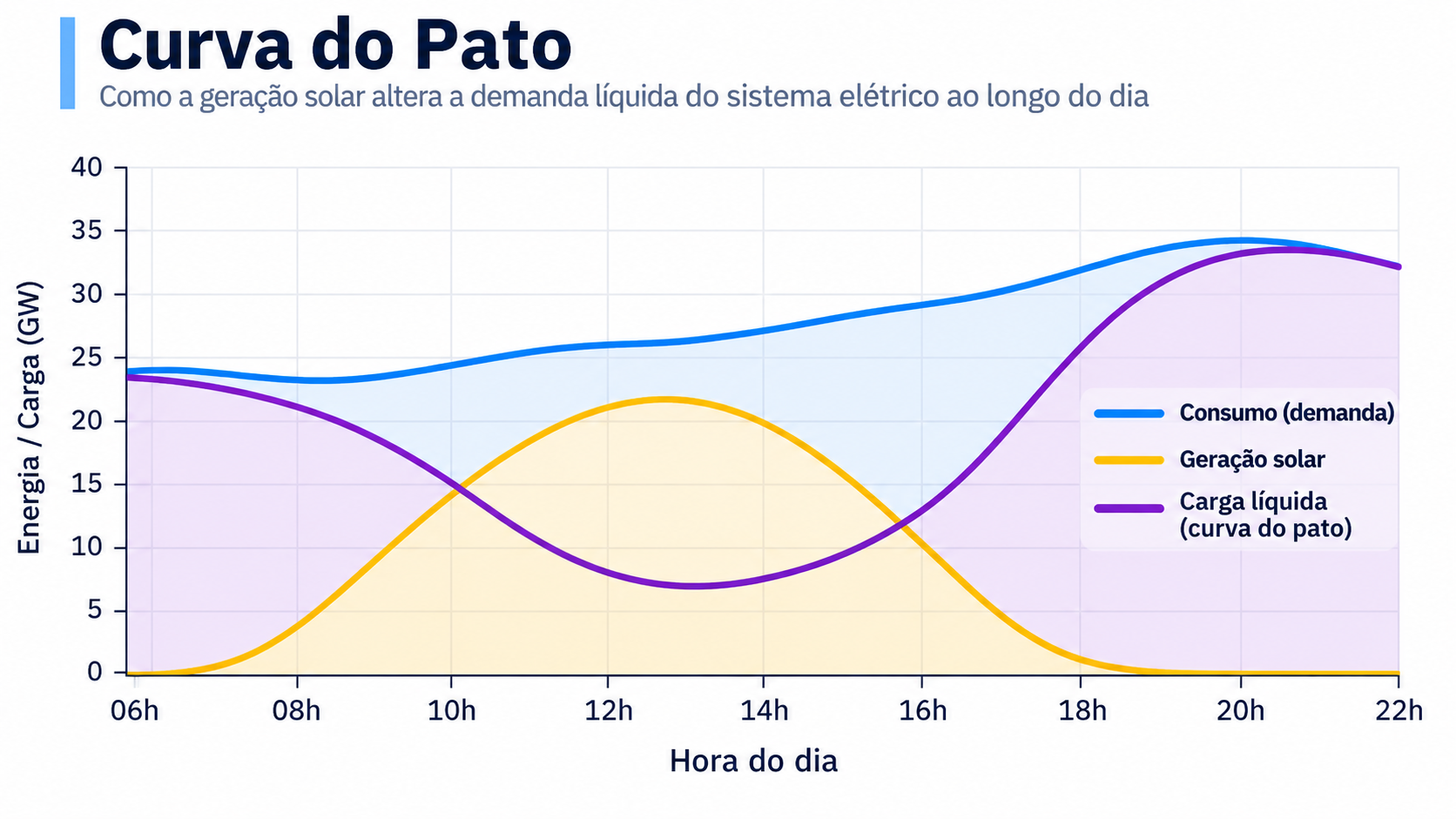
Solar power has a defining characteristic: it generates substantial amounts of electricity during the middle of the day and none at night. When the sun is at its highest point, electricity supply is abundant, and the power system can experience periods when generation exceeds consumption or transmission capacity. As the afternoon progresses, solar output declines rapidly. Electricity demand, however, does not follow the same pattern. On the contrary, in the late afternoon and early evening, people return home, turn on lights, take showers, and use household appliances and air conditioning systems.
As a result, the power system must compensate for the loss of a substantial amount of solar generation within just a few hours. This rapid increase in demand that must be met by other generation sources is known in the industry as a ramp. It is precisely during this ramp that thermal power plants are increasingly being dispatched.
What Industry Experts Are Saying
Roberto Brandão, a senior researcher at the Federal University of Rio de Janeiro’s Electric Power Sector Study Group (Gesel), explained this phenomenon in an interview with Brasil 247. According to Brandão, Brazil’s National Electric System Operator has been dispatching more thermal power plants during the afternoon to reinforce electricity supply precisely when demand remains high and solar generation begins to decline.
Brandão highlighted a critical technical consideration: only thermal power plants with relatively fast startup times and ramp rates are suitable for this type of operation. In other words, not every thermal power plant can meet this emerging demand. Operational flexibility is essential.
In an article published by Gesel in April, Brandão and Nivalde de Castro examined how the Capacity Reserve Auction, electricity price formation, and curtailment are, in the authors’ view, three manifestations of the same mismatch between electricity supply and demand throughout the day.
From Long-Term Backup to Daily Flexibility
Energy news outlet eixos effectively summarized this shift in operating strategy. Historically, Brazil’s National Electric System Operator (ONS) dispatched thermal power plants for extended periods, often lasting several months, as part of a strategy to support hydropower generation and allow reservoirs to recover. Today, the key priority is flexibility, reflecting the changing demand profile of the electricity sector.
To enable this new operating model, Brazil’s Ministry of Mines and Energy (MME) introduced a dedicated mechanism. Normative Ordinance No. 88/2024 established guidelines for thermal power plants operating under special operating conditions designed to meet capacity requirements. In practice, it allows thermal power generators to offer an alternative Unit Variable Cost (CVU) for capacity products, including peak demand coverage.
The mechanism has been well received by the market. Companies such as Eneva, Petrobras, and Energia Pecém submitted proposals to ONS to dispatch thermal power plants under more flexible operating conditions, according to eixos. An extension of the ordinance is included among the initiatives outlined in the MME’s 2026 Strategic Electricity Agenda, indicating that the operating model is expected to remain in use.
The Paradox of Excess Generation at Midday
The same phenomenon that creates a need for thermal power generation in the late afternoon produces the opposite problem at midday: excess electricity supply. At certain times, renewable generation is so abundant that ONS must reduce output from wind and solar power plants, a practice known as curtailment.
In August 2026, for example, the system operator reduced output from hydropower and thermal power plants and curtailed 98.5% of utility-scale wind and solar generation to balance the power system and prevent a blackout, according to Tribuna do Sertão. In November, ONS identified a moderate risk of having to activate its surplus energy management plan, according to Agência Cenário Energia.
This paradox—excess generation at midday and the need for additional capacity in the late afternoon—illustrates a power system undergoing a transition. It demonstrates that the challenge is no longer simply ensuring sufficient electricity supply throughout the year, but ensuring that the right energy resources are available at the right time.
How the System Operator Determines Which Power Plants Generate Electricity
To understand why thermal power plants are being dispatched more frequently, it is helpful to review how electricity dispatch works in Brazil. ONS centrally coordinates power system operations, seeking to meet electricity demand at the lowest possible cost while maintaining system reliability and security.
Under this approach, power plants are dispatched according to the merit order: those with the lowest variable operating costs are dispatched first, followed by more expensive resources. Energy sources such as solar, wind, and hydropower have very low variable costs and are generally prioritized. Thermal power plants, which depend on fuel, are dispatched when lower-cost resources are insufficient to meet demand.
There is also out-of-merit-order dispatch, which occurs for electrical or energy security reasons, such as preserving hydroelectric reservoir levels or maintaining grid stability in a particular region. What has changed in recent years is that, during the late afternoon, declining solar generation increasingly makes flexible thermal power plants a necessary option within the merit order itself.
Which Types of Thermal Power Plants Can Meet the Ramp?
Late-afternoon operations require specific technical characteristics. The power plants best suited to this role are those that combine:
- Fast startup: The ability to transition from a shutdown condition to electricity generation within a short period;
- Fast ramp rates: The ability to rapidly increase or decrease power output in response to changes in demand;
- Cycling flexibility: The ability to start up and shut down repeatedly, including on a daily basis, without excessive equipment wear;
- High availability: The ability to remain ready for operation whenever called upon by the system operator;
- Reliable fuel supply logistics: Ensuring sufficient fuel availability to support frequent and unpredictable dispatch requirements.
Technologies such as gas-fired reciprocating engines and open-cycle gas turbines generally perform particularly well in these areas. Large-scale combined-cycle power plants, which are highly efficient during continuous operation, can also provide flexibility, although they generally have longer startup times. Older and less flexible thermal power plants, by contrast, may face greater challenges in meeting this operating profile.
The Impact on Power Generators’ Performance
These changing operating dynamics are already reflected in the financial and operational results of companies across the sector. Eneva, one of Brazil’s largest gas-fired power plant operators, increased its thermal power generation by 46% in the second quarter of 2026, driven by merit-order dispatch and the evolving dynamics of Brazil’s National Interconnected System (SIN), according to Agência Cenário Energia.
This means that, in many instances, thermal power plants are being dispatched not because of exceptional system security requirements, but because they represent the most economical option for meeting demand at that particular time. This is an important distinction that reinforces the structural role of thermal power generation in daily power system operations.
The Role of Hydrological Conditions
Rainfall patterns continue to influence thermal power dispatch, and this relationship should not be overlooked. In November 2026, ONS projected that reservoirs in Brazil’s Southeast/Central-West subsystem, which accounts for approximately 70% of the country’s energy storage capacity, would end the month at 58.6% of stored energy capacity. According to Agência Cenário Energia, recovering reservoir levels reduce the need for out-of-merit-order thermal power dispatch.
In other words, even under favorable rainfall conditions, which reduce the need for thermal generation to conserve water, the power system still requires flexible resources to meet peak demand. These two functions—hydrological security and management of the daily ramp—now coexist.
How Capacity Auctions Have Incorporated This Emerging Need
The changing role of thermal power plants is also reflected in how Brazil procures capacity. The March 2026 Capacity Reserve Auction contracted approximately 19 GW of capacity, predominantly from natural gas-fired thermal power plants. The auction was designed to remunerate capacity availability, rather than simply the electricity produced.
Under this model, power plants are compensated for being ready whenever the system needs them, whether during a hydrological crisis or the daily late-afternoon ramp. It is a mechanism for recognizing the attribute the power system increasingly requires: firm and flexible capacity.
This trend became even clearer with the announcement of the battery energy storage auctions, scheduled for December 2026. Brazil’s power system is moving toward a diversified portfolio of flexibility resources in which thermal power plants, batteries, and hydropower operate in complementary roles.
Thermal Power Plants and Batteries: Complementary Roles
With the introduction of battery storage, a natural question arises: will batteries replace thermal power plants during the late afternoon? The answer is likely to be more complex.
Batteries are highly effective at shifting solar electricity generated at midday to the early evening over a period of several hours. However, their ability to deliver electricity is limited by discharge duration and the need to recharge. On cloudy days, during consecutive periods of low renewable generation, or throughout prolonged droughts, resources capable of delivering energy over extended periods remain necessary.
For this reason, the emerging trend is toward a division of roles: batteries address rapid, short-duration fluctuations, while flexible thermal power plants provide firm capacity when demand persists for longer periods or when insufficient surplus electricity is available to recharge energy storage systems.
What This Means for Power Generation Project Developers
For companies developing power generation projects, the changing role of thermal power plants has several practical implications:
- Flexibility has become a valuable attribute: Projects capable of starting quickly and responding to steep ramps are likely to become more competitive;
- Technology selection has become more strategic: Engines and turbines must be evaluated not only for their efficiency but also for their ability to withstand frequent operating cycles;
- Fuel supply logistics must keep pace: More frequent and less predictable dispatch requires appropriate fuel supply contracts and infrastructure;
- Location matters: Power plants located near major load centers and with reliable grid connections are likely to deliver greater value to the power system;
- Capacity auctions have become firmly established as the primary route to market for new firm capacity projects.
EPP (Evolution Power Partners) has an established track record in this segment. In Brazil’s 2021 emergency power auction, the company was the leading marketer of electricity from thermal power plants, accounting for 43% of the electricity traded through projects across several states, as reported by energy news outlet epbr. Its experience with projects designed to support power system security provides valuable insight into how the role of these facilities continues to evolve.
Key Issues to Consider
These changing operating dynamics also raise several issues that the industry still needs to address:
- Consumer costs: Capacity procurement and more frequent thermal power dispatch affect electricity tariffs and sector-related charges;
- Emissions: Fossil fuel-fired thermal power plants produce greenhouse gas emissions, highlighting the importance of more efficient technologies and, in the future, lower-carbon fuels such as biomethane;
- Equipment wear: Frequent startup and shutdown cycles require more intensive maintenance;
- Coordination with the natural gas sector: Demand from thermal power plants influences the utilization of gas pipeline networks and the procurement of gas transportation capacity.
Conclusion: Thermal Power as a Flexibility Resource
The 49% surge in thermal power dispatch is more than a short-term market statistic. It reveals a structural shift in the way Brazil’s power system operates. As solar power accounts for an increasing share of the electricity mix, the late afternoon is becoming a critical period, and the country needs resources capable of responding quickly to declining generation while electricity demand remains high.
In this emerging landscape, thermal power plants are no longer simply an insurance policy against drought. They are also becoming a daily source of operational flexibility. Not just any thermal power plant, but those capable of fast startups, rapid ramping, and high availability.
For power generation project developers, the message is clear: the power system is increasingly rewarding the ability to be ready at the right time. It is this capability, rather than electricity production alone, that is likely to define the value of power plants in the years ahead.
Explore more insights and analysis on the electricity sector on the EPP blog.