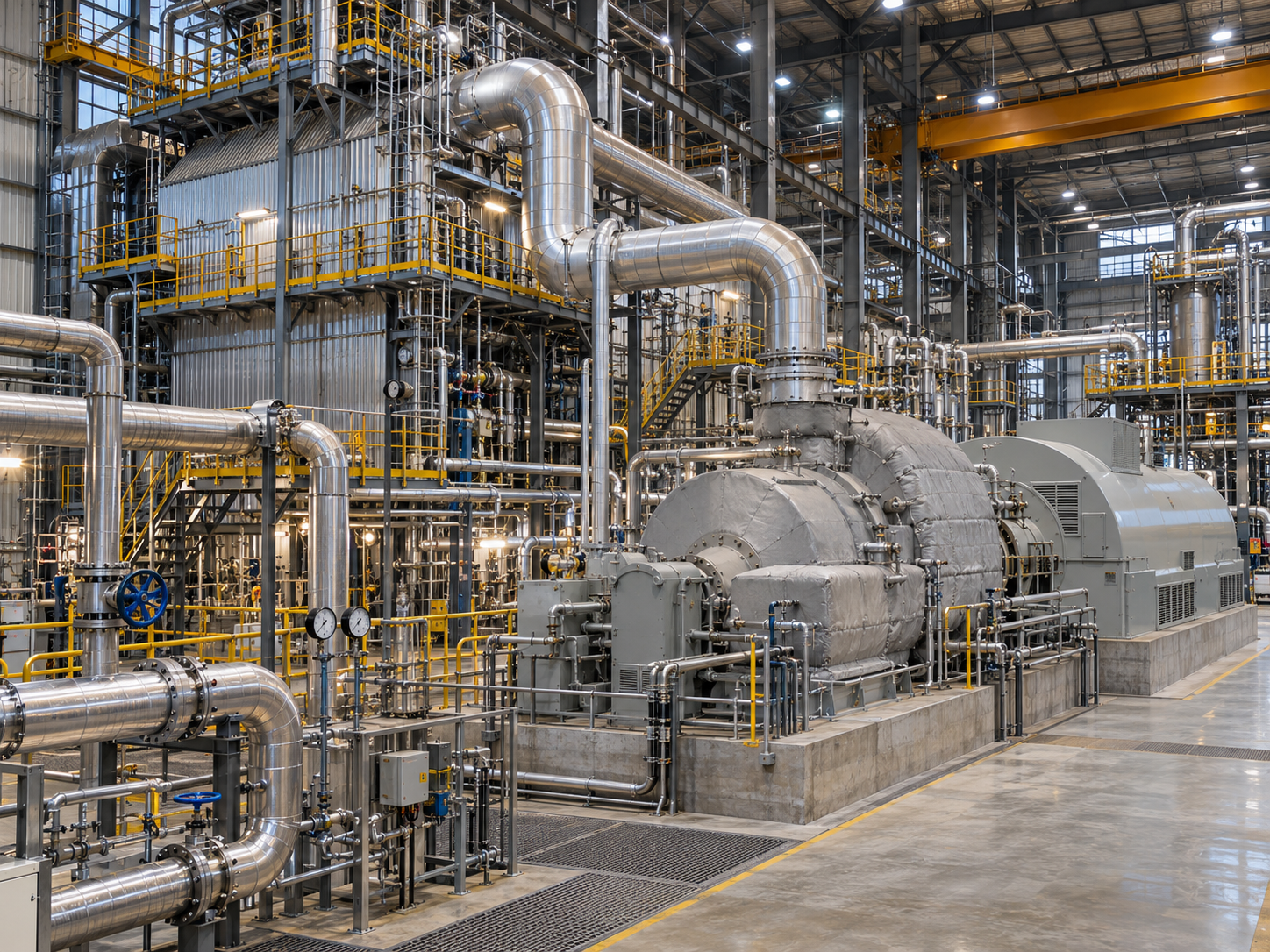
In a conventional thermal power plant, most of the energy contained in the fuel is not converted into electricity. Instead, it is lost as heat released through exhaust stacks, cooling systems, and exhaust gases. Cogeneration begins with a simple question: what if this heat could be put to productive use rather than wasted?
The answer led to the development of one of the most efficient technologies in the energy sector. A cogeneration plant simultaneously produces electricity and thermal energy from a single fuel source within an integrated system. Heat that would otherwise be wasted is recovered to produce steam, hot water, or cooling for industrial processes, climate control, or drying applications.
In this guide, we explain how cogeneration works, the main technologies available, where it is most widely used, which fuels can power a plant, and what to consider before developing a project.
The Principle Behind Cogeneration
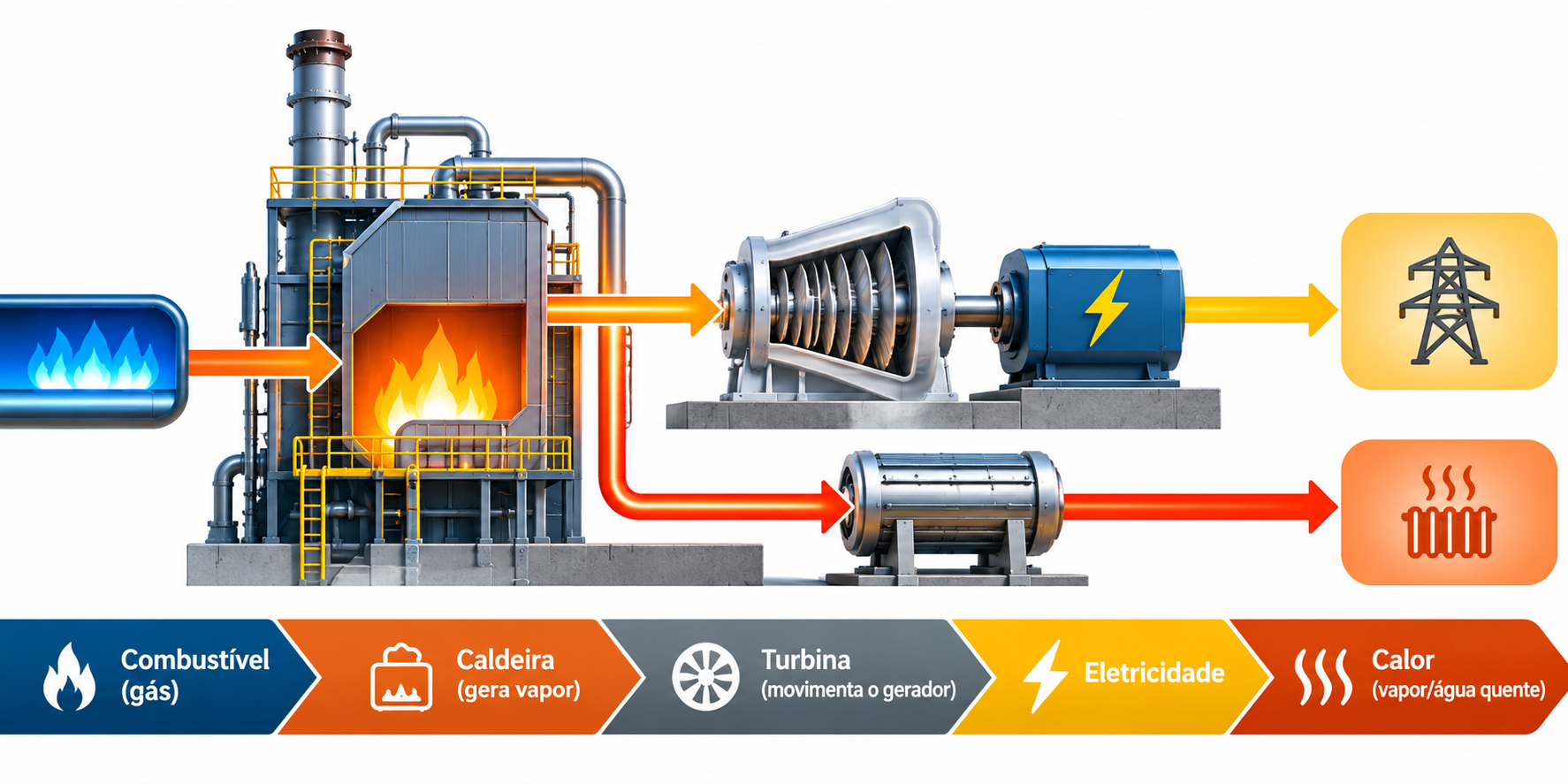
All thermal power generation follows the same basic principle: fuel is burned, the resulting heat drives a machine, such as a turbine or engine, and that machine powers an electrical generator. The challenge is that, according to the laws of thermodynamics, no heat engine can convert all thermal energy into mechanical work. A significant portion of that energy always remains.
In conventional power generation, this residual heat is treated as a loss. In cogeneration, it is treated as a valuable product. The system is designed to recover thermal energy released by the equipment and direct it toward a productive application.
The result is significantly more efficient fuel utilization. While a thermal power plant that generates electricity alone typically converts only a limited fraction of the fuel’s energy into useful output, a properly designed cogeneration plant can utilize most of that energy by combining electricity generation with useful heat recovery. In systems that also provide cooling, known as trigeneration, overall energy utilization can be even greater.
Brazil’s Ministry of Mines and Energy defines cogeneration as the simultaneous production of electricity and thermal energy from a single source within an integrated system, delivering substantial energy efficiency gains.
The Two Basic Cogeneration Configurations
There are two primary ways to configure a cogeneration plant, depending on which form of energy is produced first:
- Topping cycle (electricity generation first): Fuel is initially used to generate electricity, and the residual heat is subsequently recovered for industrial processes. This is the most common configuration, widely used in plants equipped with gas turbines and internal combustion engines.
- Bottoming cycle (heat production first): Fuel is initially used to meet the requirements of a high-temperature industrial process, such as those involving industrial furnaces, and the remaining heat is recovered to generate electricity. This configuration is less common and is typically found in industries such as steel, cement, and glass manufacturing.
The choice depends on the facility’s energy demand profile. An industrial facility requiring large volumes of low-pressure steam will generally need a different system design from one that requires high-temperature process heat.
The Main Cogeneration Technologies
Each technology offers distinct advantages and is better suited to specific energy demand profiles and fuel types.
Steam Turbines
Fuel is burned in a boiler to produce high-pressure steam. The steam drives a turbine connected to an electrical generator. After passing through the turbine, the lower-pressure steam is directed to industrial processes. This is the most widely used technology in the sugar and bioenergy sector and the pulp and paper industry because it accommodates solid fuels such as sugarcane bagasse, wood chips, and fuels such as black liquor.
Gas Turbines
Gaseous fuels, such as natural gas or biomethane, are burned in a combustion chamber, and the hot gases drive the turbine. The high-temperature exhaust gases then pass through a heat recovery steam generator or boiler to produce steam or hot water. This is a common solution in chemical and petrochemical industries, as well as large industrial complexes.
Combined Cycle
This configuration combines the two previous technologies. Hot exhaust gases from the gas turbine are used to generate steam, which drives a steam turbine and increases electricity output. The steam discharged from the second turbine can also be recovered for industrial processes. It is one of the most efficient configurations available.
Internal Combustion Engines
Engines powered by gaseous or liquid fuels drive electrical generators. Heat is recovered from the exhaust gases and engine cooling system, typically in the form of hot water or low-pressure steam. These systems are widely used in small- and medium-scale projects, including biogas applications, because of their modular design and rapid response to load variations.
Microturbines and Fuel Cells
These technologies are suited to smaller-scale applications, such as hospitals, hotels, shopping malls, and commercial buildings. Although they generally have higher costs per unit of installed capacity, they can be attractive options for facilities with consistent thermal energy demand.
Which Fuels Can Power a Cogeneration Plant?
Cogeneration is technologically flexible and can operate using a wide range of energy sources. The most common fuels include:
- Sugarcane bagasse and straw, the primary fuels for cogeneration in sugar and bioenergy mills;
- Black liquor and wood residues, used in the pulp and paper industry;
- Natural gas, used by industrial facilities connected to gas pipeline networks;
- Biogas and biomethane, produced from organic waste;
- Industrial process off-gases, such as those generated by blast furnaces and refineries;
- Other biomass sources, including rice husks, wood chips, forestry residues, and fruit husks.
Brazil’s cogeneration sector has a distinctive characteristic that sets it apart from the rest of the world. According to the Brazilian Cogeneration Industry Association (Cogen), in an interview with Revista Brasil Energia, while cogeneration worldwide relies predominantly on fossil fuels, approximately 85% of cogeneration in Brazil is renewable, driven primarily by the sugar and bioenergy sector and the pulp and paper industry.
The Scale of Cogeneration in Brazil
Cogeneration plays a significant role in Brazil’s electricity mix, although its contribution often goes unnoticed. According to Cogen, the sector operates with more than 22 GW of installed capacity and accounts for approximately 10% of Brazil’s electricity generation mix, as reported by Revista Brasil Energia.
Biomass dominates this market. A survey conducted by the association and published by energy news outlet eixos indicated that biomass accounted for 17.4 GW of cogeneration capacity in mid-2024, with most of that capacity fueled by sugarcane bagasse. More recent data from Brazil’s Electric Energy Trading Chamber (CCEE), released in February 2026, show that sugarcane bagasse accounts for 73% of the country’s installed cogeneration capacity, according to BrasilAgro.
Where Cogeneration Makes the Most Sense
Cogeneration delivers the greatest benefits when there is a simultaneous and consistent demand for electricity and heat. Several industries naturally meet these conditions:
- Sugar and bioenergy: Mills require steam for sugar and ethanol production processes and electricity to power equipment. Bagasse, the residue remaining after sugarcane crushing, becomes a fuel source.
- Pulp and paper: Production processes consume large quantities of steam, while black liquor and wood residues are used as fuel.
- Chemicals and petrochemicals: These industries have substantial steam and electricity requirements and often have access to industrial process off-gases.
- Food and beverages: Meat processing facilities, dairy plants, and breweries require heat for pasteurization, cooking, and cleaning, as well as cooling for refrigeration.
- Textiles: Fabric dyeing and finishing processes require steam and hot water.
- Hospitals, hotels, and shopping malls: These facilities have ongoing demand for hot water, climate control, and electricity throughout the day.
Across all these applications, the key principle remains the same: the more balanced and consistent the thermal energy demand, the stronger the plant’s economic performance is likely to be.
The Benefits of Cogeneration
The advantages of a well-designed cogeneration plant extend beyond energy efficiency:
- More efficient fuel utilization, reducing costs per unit of useful energy produced;
- Reduced emissions, because the same amount of fuel meets two energy demands simultaneously;
- Greater security of energy supply for industrial facilities, reducing dependence on the external power grid;
- Power generation close to the point of consumption, reducing transmission and distribution losses;
- Waste recovery, when the plant uses biomass, biogas, or industrial process gases;
- Contribution to the power system, as surplus electricity can be exported to the grid.
Cogen has repeatedly highlighted the role of biomass-based cogeneration in Brazil’s energy security. Electricity generation at sugar and bioenergy mills takes place primarily during the dry season, when hydroelectric reservoir levels are lower, helping conserve water resources and complement the country’s electricity mix.
Biogas Cogeneration: A Natural Combination
For industries and facilities that generate organic waste, biogas cogeneration represents one of the most attractive energy recovery pathways. Biogas produced in anaerobic digesters can fuel engines or turbines, generating electricity for on-site consumption, while recovered heat can be used to maintain digester temperatures or support internal industrial processes.
This heat recovery is particularly valuable. Anaerobic digestion performs best within specific temperature ranges, and heat recovered through cogeneration can help maintain optimal digester conditions, increasing gas production. The result is a self-reinforcing cycle.
Meat processing facilities, dairy plants, livestock farms, ethanol plants, and wastewater treatment facilities are examples of operations where this integration can be particularly beneficial. In some cases, the decision between using biogas for cogeneration or upgrading it to biomethane depends on local energy demand, proximity to the gas pipeline network, and the potential revenue streams associated with each pathway.
This type of assessment is part of the project development work carried out by GNPW, which specializes in the development and implementation of cogeneration and power generation facilities.
What to Consider Before Developing a Cogeneration Project
A cogeneration project begins long before equipment is purchased. The initial development stages determine whether the plant will deliver the expected benefits. The main factors to evaluate include:
- Energy demand profile: How much electricity, steam, hot water, and cooling the facility consumes, and how that consumption varies throughout the day, week, and year;
- Heat-to-power ratio: Each technology produces a different proportion of thermal and electrical energy, and the selected configuration must align with the facility’s requirements;
- Fuel availability and cost: Fuel prices and supply reliability are critical to project feasibility;
- Grid connection conditions: The ability to export surplus electricity and applicable grid access requirements influence system sizing;
- Physical space and logistics: Boilers, turbines, and fuel storage systems require adequate space and accessibility;
- Environmental permitting: Atmospheric emissions, water consumption, and noise levels must comply with requirements established by the relevant authorities;
- Business model: The plant may be owned by the facility, operated by a third party, or structured under long-term utility supply agreements.
The Challenges Facing Cogeneration in Brazil
Despite its established track record, cogeneration still faces barriers to further expansion. According to Cogen, the primary challenge is the price of natural gas, which limits growth among industries without access to biomass. The association also advocates for greater recognition of cogeneration’s potential in national energy planning and for allowing biomass and ethanol-based generation projects to participate in capacity reserve auctions, as highlighted in an interview with Revista Brasil Energia.
Other challenges include substantial upfront capital investment, the technical complexity of integrating cogeneration facilities into existing industrial processes, and the need for specialized maintenance. For these reasons, successful projects typically depend on detailed feasibility studies and experienced engineering and operations partners.
Cogeneration and Industrial Decarbonization
Cogeneration is gaining renewed importance in the context of industrial decarbonization. Industries that need to reduce emissions but cannot electrify all their thermal processes can turn to biomass- or biogas-based cogeneration as a viable pathway to replace fossil fuels without compromising their steam and process heat requirements.
Even when natural gas is used as fuel, cogeneration generally reduces emissions compared with a scenario in which electricity and heat are produced separately. As biomethane production scales up and certification becomes established in Brazil, gas-fired cogeneration plants can gradually transition to a renewable fuel source.
This topic is closely related to another article on the GNPW blog, which explores how industrial decarbonization works and which technologies can help reduce emissions.
Conclusion: Turning Waste Heat into Economic Value
At its core, cogeneration is a technology designed to make better use of available energy. It is based on the recognition that heat wasted in a conventional power plant has economic value and can meet the practical needs of industrial and commercial facilities. As a result, the same amount of fuel delivers more useful energy, with lower emissions and greater security of supply.
In Brazil, cogeneration is already an important component of the electricity mix, supported primarily by sugarcane biomass and the pulp and paper industry. However, there is still significant potential for expansion, particularly in industries that generate organic waste and can combine biogas production and cogeneration within a single project.
For companies evaluating this pathway, the first step is to understand their own energy consumption profile. This assessment provides the foundation for selecting the technology, fuel, and business model capable of turning heat into a competitive advantage.
Discover the cogeneration and power generation solutions offered by GNPW.