A new study from Brazil’s Ten-Year Energy Expansion Plan (PDE 2036) projects growing energy consumption and highlights changes that businesses and energy infrastructure planners need to prepare for.
What will Brazil’s energy demand look like ten years from now? Answering that question involves more than estimating how many megawatts or how much fuel the economy will need.
It requires understanding which sectors will consume energy, which sources will gain market share, how new technologies will reshape production processes, and which investments will need to begin well before 2036.
In October 2026, Brazil’s Ministry of Mines and Energy (MME) and the Energy Research Office (EPE) released the Energy Demand Report for the Ten-Year Energy Expansion Plan (PDE 2036).
The document projects average annual growth of 1.8% in final energy consumption between 2026 and 2036. In absolute terms, demand is expected to increase from 302 million to 362 million tonnes of oil equivalent (Mtoe).
The projections also indicate changes in the energy mix and in consumption patterns across different economic sectors.
For industry, this is particularly significant: decisions made today about equipment, production processes, and energy infrastructure could shape competitiveness over the next decade.
Demand Growth Is Only Part of the Transformation
When a study projects rising energy consumption, the immediate conclusion is that the country will need greater supply capacity.
That need is real, but it represents only part of the picture.
Economic growth changes energy consumption in several ways.
Expanding industrial production can increase demand for electricity and fuels. Adopting more efficient technologies can reduce the energy required per unit of output. Changes in the structure of the economy also affect the relative contribution of each activity to national energy consumption.
At the same time, certain processes may shift from one energy source to another.
Together, these factors make energy planning considerably more complex than simply projecting a percentage increase in demand.
PDE 2036 considers various economic, technological, and structural factors to assess how demand may evolve.
Its projections, therefore, do not assume that current conditions will continue unchanged. Instead, they establish a reference scenario based on assumptions that may evolve throughout the planning period.
This distinction is essential to understanding the purpose of a ten-year energy plan.
The document does not predict exactly what will happen in 2036. It provides a technical foundation for guiding decisions and assessing potential energy expansion requirements.
Industry Remains Central to Energy Consumption
According to the Energy Demand Report, industry and transportation are expected to account for approximately 62% of Brazil’s final energy consumption in 2036.
This figure underscores the importance of both sectors to national energy planning.
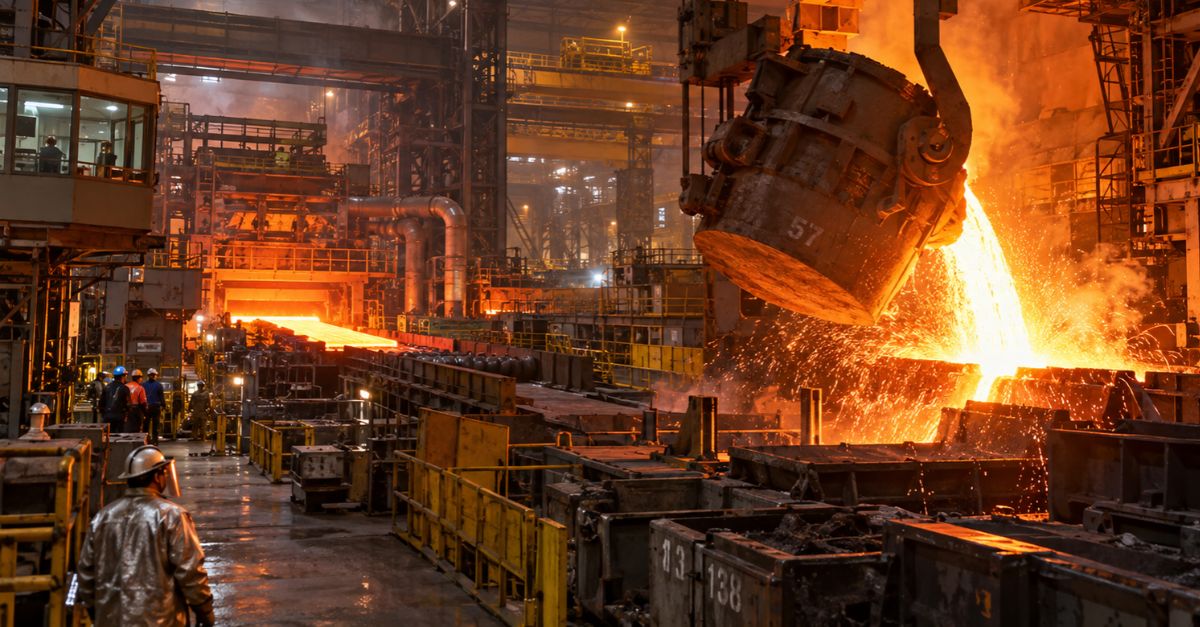
In industry, energy consumption is directly linked to the characteristics of production processes.
Industrial operations may require electricity for motors, drive systems, automation, refrigeration systems, and various types of equipment.
Other activities rely on thermal energy for heating, drying, steam generation, and material transformation processes.
These applications have different requirements in terms of temperature, continuous operation, availability, and supply capacity.
Consequently, the industrial energy transition cannot be approached through a single technological solution.
The choice of energy sources depends on the requirements of each process, equipment characteristics, economic conditions, and available infrastructure.
In some activities, electrification may offer a viable alternative. In others, gaseous fuels or specialized thermal solutions may continue to play important roles.
Any assessment must consider efficiency, reliability, costs, emissions, and technical feasibility.
The prospect of growing energy demand makes these decisions even more important.
Electricity Is Expected to Play a Larger Role
One of the main trends identified in PDE 2036 is the growing share of electricity in Brazil’s energy consumption.
The study projects that total electricity consumption, including different forms of supply, could reach 979 terawatt-hours (TWh) by 2036.
This represents average annual growth of 3.4% over the period analyzed.
The projected increase exceeds the average growth rate of total final energy consumption.
This difference points to a shift in the composition of energy demand.
Electricity is expected to become increasingly important in applications currently powered by other energy sources, while new equipment and economic activities create additional demand for electric power.
For industry, this trend may increase the need to assess grid connection capacity, on-site electrical infrastructure, supply availability, and equipment compatibility.
However, greater electrification does not automatically eliminate the role of other energy sources.
Industrial processes have specific technical requirements, and not all applications offer the same conditions for replacing fuels.
Effective planning requires identifying where electrification creates value and where other alternatives remain relevant.
Emerging Sectors Are Also Reshaping Energy Planning
Demand growth will not be driven exclusively by the expansion of traditional activities.
PDE 2036 highlights emerging electricity loads associated with data centers, electric mobility, and hydrogen production through electrolysis.
According to the study, these activities are expected to consume approximately 47 TWh of electricity combined in 2036.
That figure represents more than ten times the estimated demand for these applications in 2026.
The significance of these new consumers goes beyond the total amount of energy they require.
Load locations, consumption continuity, and infrastructure requirements can all influence electricity system planning.
Data centers, for example, have operating characteristics that differ from those of many traditional industrial facilities.
Hydrogen production projects using electrolysis may require substantial amounts of electricity, depending on their capacity and configuration.
The expansion of electric mobility also changes how electricity consumption is distributed across certain segments.
These developments reinforce the need to coordinate investment decisions, energy availability, and infrastructure development.
Emerging consumers do not simply represent additional demand. They may introduce entirely new patterns of energy system utilization.
Electricity, Natural Gas, and Energy Source Diversification
The Energy Demand Report also projects changes in the relative shares of different energy sources.
Although petroleum products will remain important, electricity and natural gas are expected to account for a larger share of the energy consumption mix.
This shift reflects changes in economic activities, production processes, and available technological alternatives.
In industry, energy diversification must be evaluated according to the characteristics of each operation.
Natural gas can support thermal applications and processes in which gaseous fuels offer operational advantages.
Biomethane also deserves attention in this discussion.
Produced through the treatment and purification of biogas, biomethane can serve certain energy applications, provided it meets applicable technical and regulatory requirements.
Its industrial use depends on factors such as regional availability, quality specifications, transportation or distribution infrastructure, and the economic conditions of supply.
For this reason, biomethane’s potential should not be interpreted as a guarantee of widespread adoption across all industrial segments.
Its integration depends on technically feasible projects and suitable market conditions.
PDE 2036 also points to the potential for increased use of natural gas and biomethane in specific transportation applications.
Energy diversification should therefore be understood in terms of actual operating conditions rather than as a uniform replacement of the entire energy mix.
The Industrial Energy Transition Requires Process-Specific Decisions
Reducing emissions and improving efficiency are important objectives across industrial sectors.
However, the path to achieving them is not necessarily the same.
An industrial facility with substantial steam requirements faces different challenges from a plant whose energy consumption is concentrated in electric motors.
Likewise, the availability of energy infrastructure varies by region.
Choosing between technologies requires evaluating several criteria together.
The first is technical suitability.
An energy alternative must be capable of meeting the temperature, power, continuity, and quality requirements of the operation.
The second is economic feasibility.
Equipment investments, operating costs, maintenance, supply contracts, and potential infrastructure modifications all influence the decision.
The third concerns environmental performance.
Emissions reductions must be evaluated using appropriate methodologies, considering the characteristics of the energy sources involved and the boundaries established for the assessment.
Operational safety, technological maturity, and implementation risks must also be considered.
A sound energy strategy is not based solely on selecting an energy source with a particular environmental attribute.
It seeks to combine technical performance, efficiency, reliability, and measurable results.
Planning for 2036 Is Already Shaping Investment Decisions
A decade may seem like a distant horizon for business decisions.
However, industrial assets and infrastructure projects often have investment and operating cycles that extend over many years.
Replacing equipment, modernizing facilities, and adapting production processes all require planning.
Some decisions involve engineering projects, permitting, supplier contracts, and scheduled production shutdowns.
Others depend on external infrastructure, including electricity networks, fuel availability, and logistics facilities.
This means that a transformation projected for 2036 may require investments to begin many years in advance.
Analyzing energy scenarios helps identify potential future needs and avoid decisions that may be incompatible with the expected development of an operation.
For example, an industrial facility expansion may be accompanied by studies assessing electrical supply capacity and alternatives for meeting thermal energy requirements.
A company considering equipment replacement may evaluate not only current costs but also operating and supply conditions throughout the useful life of its new assets.
The objective is not to predict every change with absolute precision.
It is to make decisions that remain sufficiently robust under different scenarios.
Energy Infrastructure and Industrial Competitiveness Are Connected
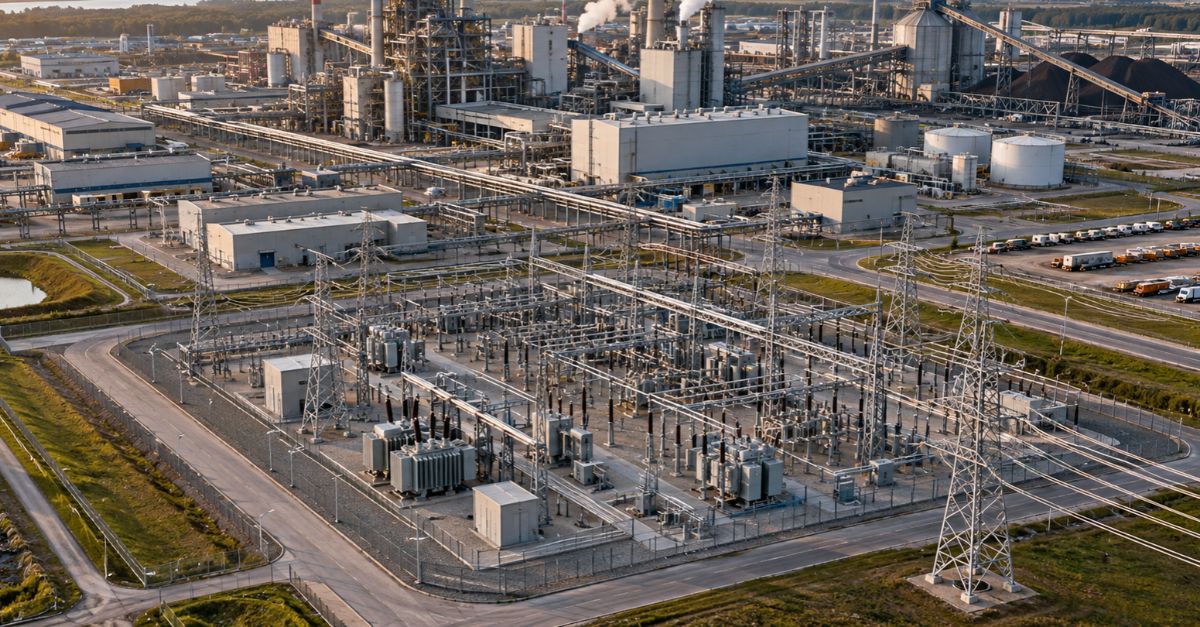
Energy availability is one of the factors influencing industrial operations.
However, energy competitiveness involves more than supply volumes.
Reliability, cost predictability, process efficiency, and infrastructure conditions are equally important.
For energy-intensive industries, cost fluctuations and supply constraints can affect production and investment decisions.
Planned energy expansion must account for these characteristics.
Growing industrial demand and the emergence of new electricity loads reinforce the need to align infrastructure, technology, and economic planning.
From a business perspective, decisions about energy sources must support productivity, operational continuity, and risk management objectives.
From the energy sector’s perspective, understanding how consumer needs are evolving is essential to structuring investments consistent with expansion scenarios.
This relationship explains why ten-year energy studies are relevant even to organizations that are not directly involved in electricity generation.
Energy is a fundamental component of countless production and supply chains.
The Role of Energy Efficiency
Any discussion of growing energy demand would be incomplete without considering energy efficiency.
Improving efficiency means achieving a given production outcome while consuming less energy, assuming comparable operating conditions.
In industrial environments, this may involve improvements to motor-driven systems, heat recovery, automation, maintenance, and production processes.
The opportunities vary depending on the activity.
Efficiency measures can help reduce operating costs and improve the use of available resources.
They can also change future infrastructure requirements.
However, their effects depend on the scale of adoption, actual performance, and changes in production levels.
An industrial facility may reduce its energy consumption per unit of output while still increasing total demand if production grows significantly.
For this reason, energy intensity indicators and absolute consumption figures must be analyzed separately.
This distinction is important when interpreting national projections.
Energy consumption results from the interaction between economic activity, production structures, and technological efficiency.
Industrial transformation may simultaneously involve production expansion, equipment modernization, and changes in the mix of energy sources used.
From Energy Projections to Investment Decisions
PDE 2036 presents a reference scenario that can support strategic assessments.
For investors, project developers, and industrial companies, its value lies in organizing information about potential changes in energy demand.
This does not mean that projected figures should be used in isolation to justify investments.
Every project requires its own market, engineering, risk, and financial feasibility studies.
National projections provide context, but they do not replace specific assessments of location, capacity, infrastructure access, or commercial conditions.
It is also important to recognize that scenarios may be revised in response to economic, technological, and regulatory changes.
Energy planning is an ongoing process.
In this context, the publication of new thematic reports and the organization of public consultations help strengthen the technical foundation for discussion.
The version of PDE 2036 released in October 2026 remains open for public consultation until November 6.
The feedback received may help inform improvements to the document.
The Next Decade Begins With Today’s Decisions
PDE 2036 projections indicate that Brazil will consume more energy and experience significant changes in the composition of its demand.
Electricity is expected to increase its share, emerging consumers will become more important, and industry and transportation will remain central to energy planning.
These developments must be assessed through an integrated approach.
Infrastructure development, industrial modernization, energy efficiency, and source diversification are not independent processes.
They are interconnected dimensions of the same economic and technological transformation.
For businesses and investors, the challenge is to understand how these trends relate to the specific needs of each activity.
More than predicting energy consumption in 2036, planning helps identify decisions that need to be made well before then.
The energy that will power the next decade will be shaped by the infrastructure, technology, and investment decisions made in the years ahead.