In a study presented at COP30, the government shows that climate isn’t an environmental issue, it’s a question of the country’s economic survival
On November 18, 2025, during COP30 in Belém, Brazil’s Ministry of Planning and Budget delivered a presentation that should resonate far beyond the halls of climate negotiations. A 219-page document titled “Strategic Study of the Economic Impacts of Climate Change in Brazil” put precise figures on a debate that for too long has swung between scientific abstraction and environmental rhetoric detached from economic reality.
The numbers, translating research coordinated by researcher Régis Rathmann and carried out in partnership with the Inter-American Development Bank, reveal something economists know but politicians prefer to ignore: climate change is not an environmental problem happening on the margins of the economy. It is a structural driver of economic loss, regional inequality, and productive instability that will strike at the core of Brazil’s economic model.
If the world follows a trajectory of 4 degrees Celsius of warming by the end of the century, Brazil will lose between 10.3 trillion and 17.1 trillion reais in GDP by 2050. To put that figure in terms anyone can understand: Brazil’s GDP in 2024 was 11.7 trillion reais. The country could lose the equivalent of its entire annual wealth, once, twice, or even three times over. These are not projections from apocalyptic environmentalists. They are simulations from computable general equilibrium economic models, the same tools used by the World Bank and the International Monetary Fund.
The Regional Inequality No One Wants to Confront
But the headline number of 17 trillion hides an even more uncomfortable truth. The impacts will not be distributed evenly across Brazil. A country that already concentrates enormous regional inequality will see that inequality deepen structurally under the climate crisis.
In the 4-degree warming scenario, Brazil’s Center-West would lose 126% of its projected 2050 GDP. Read that again. One hundred and twenty-six percent. Economists typically speak in terms of “a 10% or 20% loss of regional GDP.” Here we’re talking about a scenario in which the region would effectively stop generating wealth. Tocantins would see its GDP reduced by 172%, Goiás by 166%, Mato Grosso by 158%.
Northern Brazil would face a 97% loss of projected GDP. The Northeast, 96%. Meanwhile, the Southeast, more economically diversified and less dependent on climate-sensitive activities, would lose 74% of its GDP. The South, 54%.
This is not random. It’s because Brazil’s poorer regions are exactly those more dependent on climate-sensitive activities: agribusiness in the Center-West, agriculture in the Northeast, hydropower and livestock in the North.
When the climate shifts, these regions suffer first, suffer more, and take longer to recover.The implied message is devastating: you cannot reduce regional inequality while allowing climate change to advance unchecked. These goals are economically contradictory. Choose one or the other.
The Jobs That Will Disappear Quietly
The study projects that Brazil could lose 4.4 million jobs between 2025 and 2050 under a 4-degree warming scenario. Again, poorer regions are hit disproportionately. The Center-West would lose 7% of projected 2050 jobs, the North 5%, and the Northeast 4%. The South and Southeast would lose around 2% on average.
These are not abstract numbers economists debate in academic seminars. These are 4.4 million people who will not have income to feed their families. These are cities that will stop collecting payroll taxes, losing the capacity to sustain public services. These are entire regions entering cycles of deeper poverty.
A worker in the Northeast reading this in 2025 is already living a reality the study only projects mathematically: warming is already affecting where they can work, how much they earn, and whether they can work year-round. The study simply quantifies this for 2050.
The Agriculture That Feeds the Country: Losing Productivity
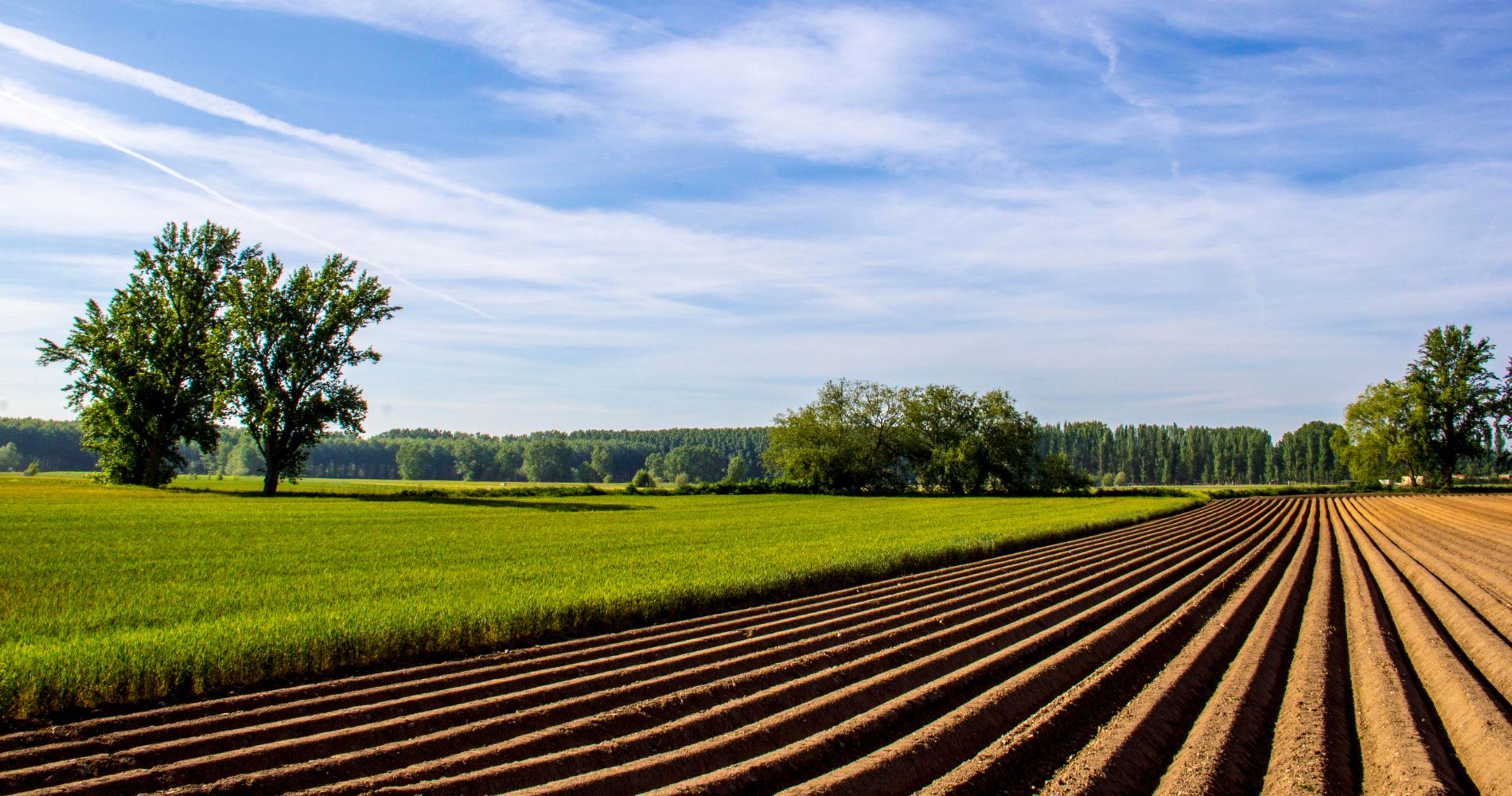
The study devotes special attention to agriculture because it’s impossible to talk about Brazil’s economy without talking about agribusiness. And the news is not good. Strategic crops such as soybeans, corn, beans, sugarcane, coffee, and oranges would face significant productivity declines under warming scenarios.
Mato Grosso, Brazil’s largest soybean producer, would see productivity fall between 16% and 29% by 2050. São Paulo would see sugarcane productivity drop 20%. In the Northeast, Maranhão would see productivity fall 14.5%, Piauí 10%, Bahia 10.3%.
This has global implications. Brazil accounts for a huge share of global agricultural production. When the climate changes here, global food production suffers. Food prices rise. Food-importing countries face food insecurity. And Brazil, which could have been the world’s breadbasket, sees its competitive advantage eroded by the climate.
The Hidden Cost of Water
One of the less obvious but potentially more severe costs is access to water. The study projects a 15% increase in water costs under the 4-degree warming scenario. The Northeast would be particularly affected. Maranhão, Piauí, and Bahia, states that already periodically face extreme drought, would see water costs spike even further.
This is a cost that doesn’t make headlines. It’s not a spectacular hurricane or a flood going viral on social media. It’s the slow, steady erosion of people’s ability to pay for water to drink, cook, and irrigate crops. It’s the privatization of a resource once treated as infinite. It’s rising conflict over water access in regions already facing scarcity.
The Other Side: What We Gain by Acting
The study, however, is not only apocalyptic. It also quantifies the benefits of action. If the world keeps warming limited to 1.5 degrees Celsius, the Paris Agreement goal, Brazil would gain an additional 6.7 trillion reais in GDP by 2050 compared with the 2-degree scenario.6.7 trillion reais. That’s more than half of Brazil’s annual GDP in 2024.
It’s not a cost. It’s a gain. It’s wealth that would be created.The biggest beneficiaries would be exactly the regions that would suffer most from inaction. The North would gain 50% in regional GDP, the Northeast 39%, and the Center-West 34%, compared with higher-warming scenarios.
Climate action would create approximately 1 million additional jobs between 2025 and 2050, mainly in the forestry and agricultural sectors. Food prices would fall. The productivity of the economy as a whole would rise by 5.4 percentage points compared with the inaction scenario.
In other words, not acting is far more expensive than acting. Dramatically more expensive. The common narrative that the energy transition and climate action cost money is flipped by the data. Climate action is an investment. Inaction is wasted resources.
Productivity as the Great Multiplier
One aspect that slips past headlines but is crucial to understanding long-term impact is productivity. Under the 4-degree warming scenario, Total Factor Productivity, which measures how efficiently an economy turns inputs into outputs, would grow only 3.2% cumulatively by 2050.
Under the 1.5-degree scenario, with accelerated decarbonization, TFP would grow 9.1% cumulatively. The 5.4 percentage-point gap looks small until you realize it means climate inaction would slow the pace at which Brazil’s entire economy improves its efficiency.
A country that grows with low productivity is a country that grows slowly, that cannot raise per capita income, that becomes poorer in relative terms. This is not a 2050 problem. It’s a problem that would begin to show up already in the 2030s, gradually reducing the capacity for innovation, modernization, and investment in education.
Why This Matters Now
The study was released in November 2025, days before Brazil committed at COP30 to a target of reducing emissions by 59% to 67% by 2035. It served as technical and political backing so the negotiation could happen with clear information about what was at stake.
But the document’s real value lies in its ability to translate what seemed like an environmental issue into a fundamentally economic one. Sustainability is not an isolated environmental agenda. Climate adaptation is economic planning, industrial policy, and regional development.
A government that wants inclusive economic growth has to account for climate change. A business owner who wants to invest in agricultural infrastructure has to account for climate change. A worker who wants job security has to account for climate change.
This study quantifies why. The numbers don’t lie. And they leave no room for the interpretive ambiguity politicians love to hide behind. Either you act and gain 6.7 trillion reais in GDP. Or you don’t act and lose 17 trillion reais.That’s the choice Brazil now understands. The question is what it will do with it.